The 9 Best Chinese Restaurants in Tokyo (2026)
Nine Chinese restaurants in Tokyo for 2026, from Sazenka's seasonal Chinese cooking in Minamiazabu to Akasaka Shisen Hanten's Sichuan and the Cantonese dining rooms of the city's grand hotels.
Why we wrote this guide
Chinese cooking in Tokyo has deep roots. Akasaka Shisen Hanten opened in 1970 as a branch of the Sichuan house that chef Chen Kenmin founded in the city in 1958, and three generations of his family have carried its Sichuan style, refined in Japan, with Chen mapo tofu at the center. At the other end of the list sits Sazenka in Minamiazabu, where Chinese technique from Guangdong to Sichuan meets ingredients from Japan's four seasons, and which holds three MICHELIN stars in the MICHELIN Guide Tokyo 2026.
Between them, seven of the nine are hotel dining rooms: Mandarin Oriental, Palace Hotel, The Okura, Grand Hyatt, The Peninsula, Conrad and Janu Tokyo. Cantonese leads, with Peking duck, roast meats and dim sum made by hand, while Chinaroom draws on Beijing, Shanghai, Sichuan and Guangdong and Hu Jing reworks dishes from across China for a contemporary table.
Outside Las Vegas the restaurant reservation sits with the venue, not with us. Every restaurant below takes bookings online, and each venue page carries the link.
Last updated November 2026.
The ranked guide
1. Sazenka (Minamiazabu)
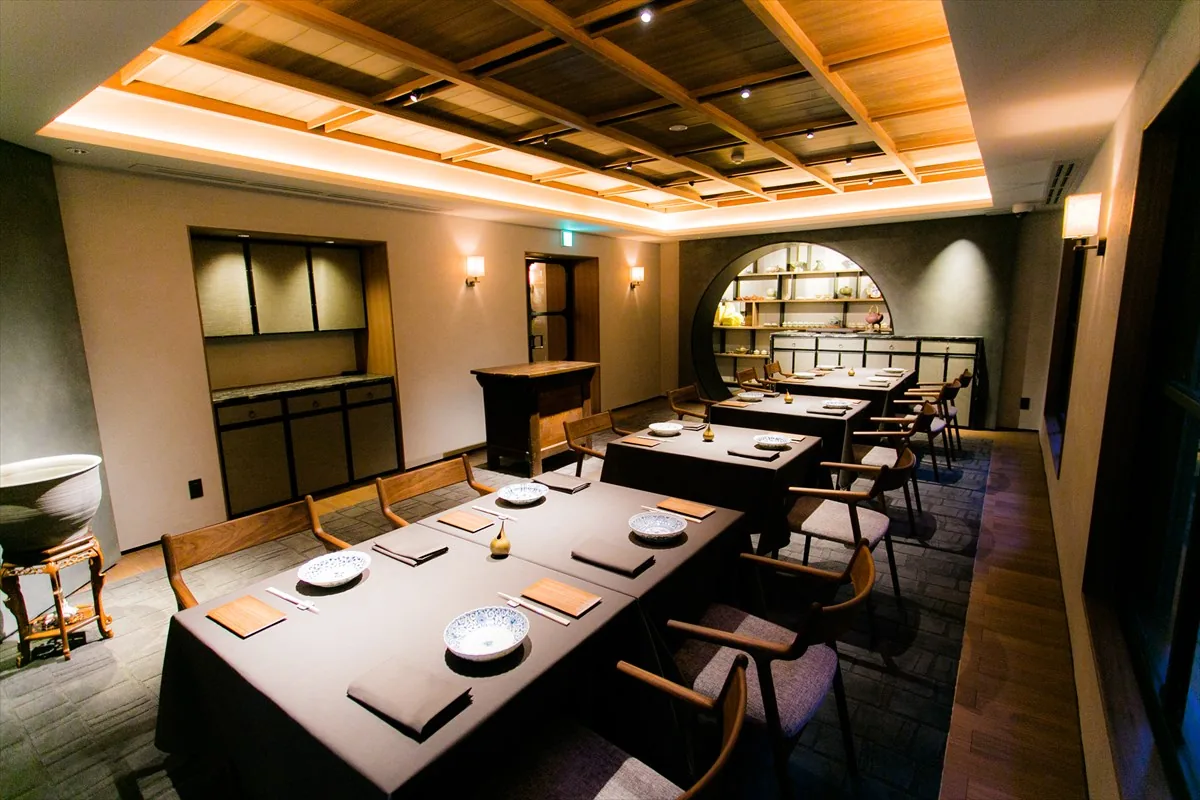
Sazenka is a Chinese restaurant in Minamiazabu, set in a converted detached house that was once an embassy residence, near Arisugawa-no-miya Memorial Park. Chef Tomoya Kawada opened it in February 2017, and it holds three MICHELIN stars in the MICHELIN Guide Tokyo 2026 and is No. 21 on Asia's 50 Best Restaurants 2026. The guiding idea is wakon kansai, Japanese spirit with Chinese talent. The main dining room on the ground floor has 14 seats, with a private room for three to four beside it and a second private room for four to six upstairs.
Kawada applies the techniques of Chinese cooking, from Guangdong to Sichuan, to ingredients from Japan's four seasons. Dinner is a degustation course of seasonal ingredients the chef selects, or a course centered on simmered dried abalone, and in winter the menu turns to Shanghai hairy crab. Pairings come three ways: Japanese and Chinese teas brewed at the water temperature each leaf needs, wine with Shaoxing wine and Japanese sake, or a mix with tea served between the drinks. Dinner runs from Tuesday to Saturday, with doors at 16:00 and last seating at 19:30, and closing days vary month to month. Smart casual is recommended, men are asked not to wear T-shirts, shorts or sandals, and guests are asked to skip strong perfume so the aromas of the food come through.
See Sazenka.
Best for: a once-a-year tasting dinner with a tea pairing.
2. Akasaka Shisen Hanten (Hirakawacho)
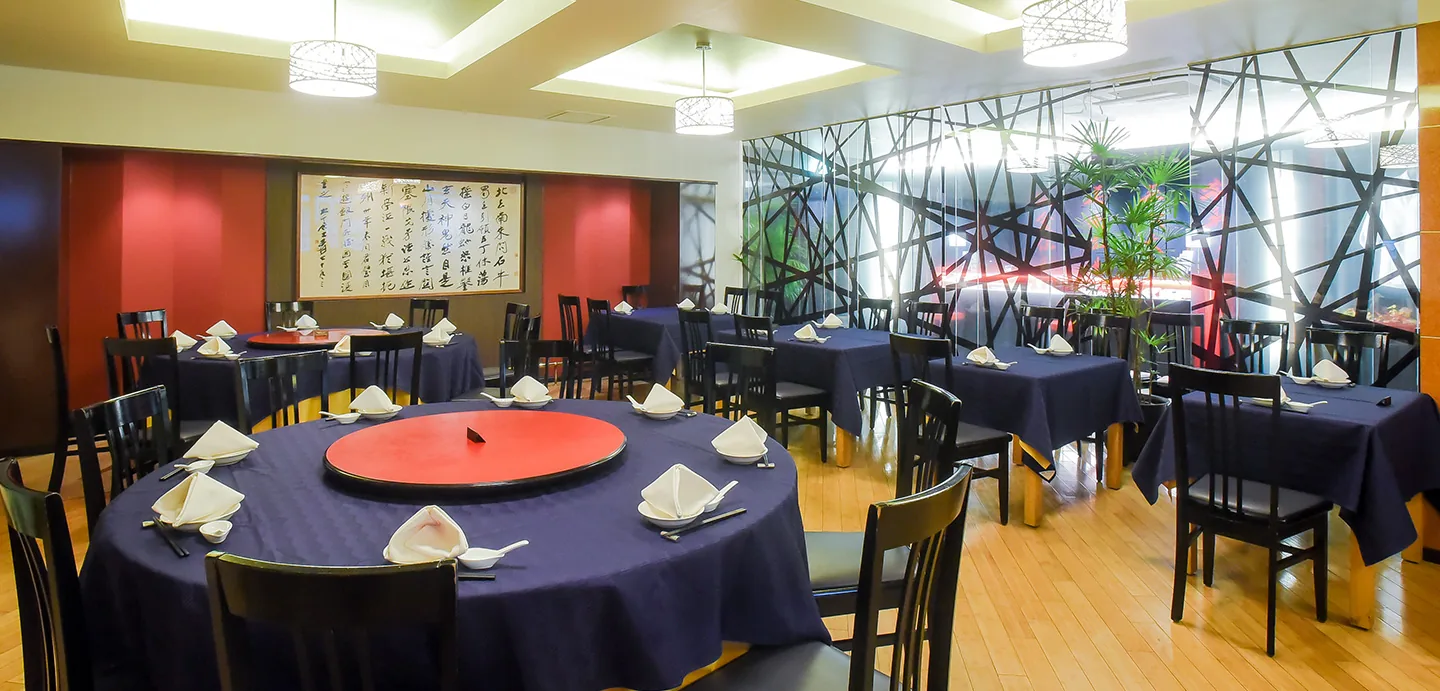
Akasaka Shisen Hanten is the Akasaka branch of Shisen Hanten, the Sichuan restaurant founded in Tokyo in 1958 by chef Chen Kenmin, on the fifth and sixth floors of the Zenkoku Ryokan Kaikan building at 2-5-5 Hirakawacho in Chiyoda. The branch opened in 1970, and the house style, Sichuan cooking carried from China and refined in Japan, has been passed through three generations of the founding chef's family. The sixth floor is the main dining room, with 100 seats across 23 tables, and the fifth floor holds the private rooms and banquet halls, which take parties from eight to 130 guests.
The dish that defines the house is Chen mapo tofu, served with rice to close the set courses, with tantanmen offered in its place on some menus. Courses open with a Chinese hors d'oeuvre platter and move through soups, stir-fries and braises that change with the month, and the Premiere dinner course is the head chef's own selection, built on seasonal ingredients and reserved by the day before for two or more guests. Lunch runs from 11:30am, last order 2pm, and dinner from 5pm, last order 9pm, Tuesday through Sunday. The restaurant closes on Mondays and over the New Year holidays, and weekday lunch bookings are for set courses.
See Akasaka Shisen Hanten.
Best for: a Sichuan set course that closes on Chen mapo tofu, or a company banquet.
3. Sense (Mandarin Oriental, Tokyo)
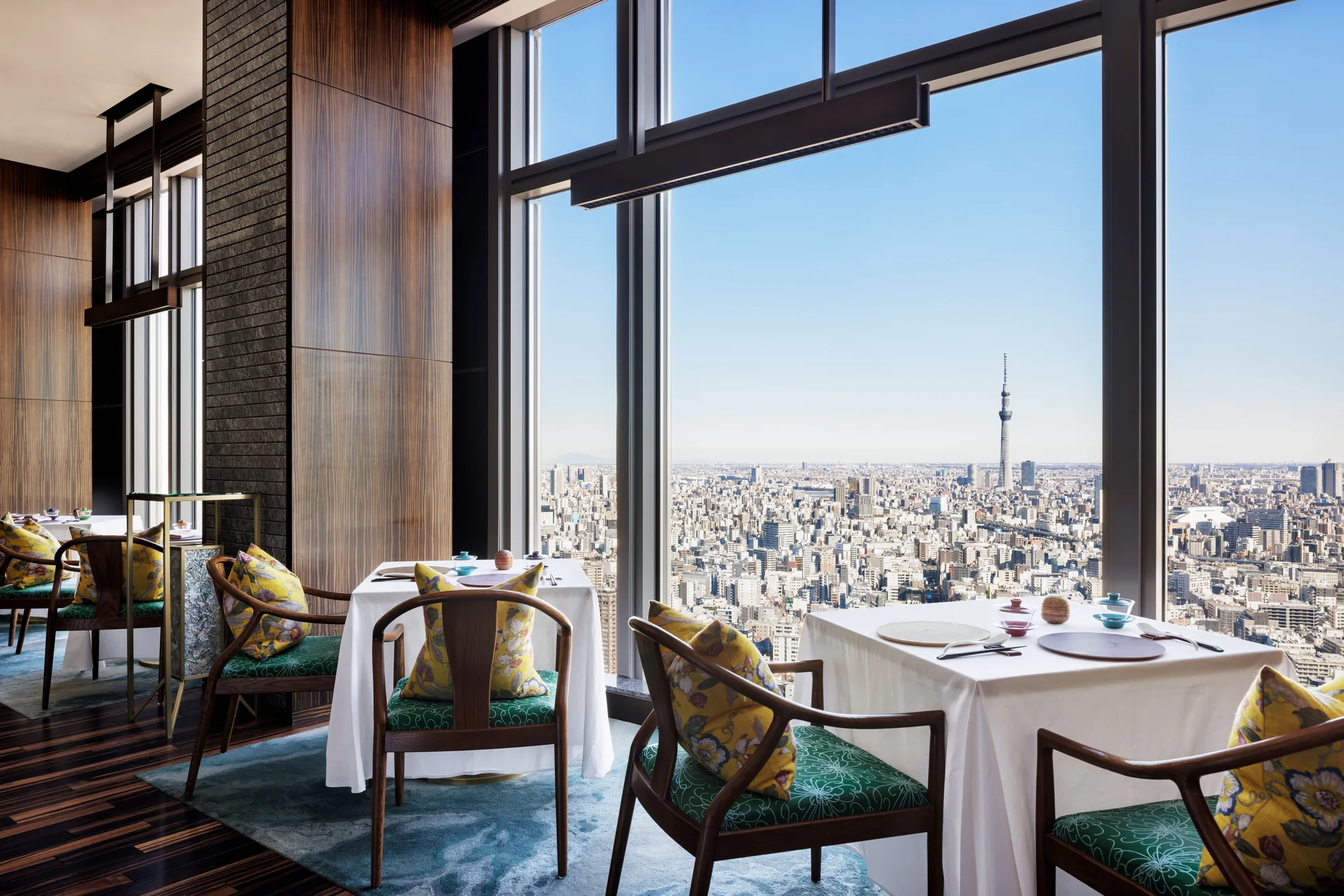
Sense is the Cantonese restaurant of Mandarin Oriental, Tokyo, on the hotel's 37th floor inside Nihombashi Mitsui Tower in Nihonbashi Muromachi, and the dining room looks out over the city to Tokyo Skytree. Executive Chef Toshiyuki Nakama, who joined the hotel in 2005, cooks Cantonese food with seasonal produce sent by growers and fishermen from Hokkaido to Okinawa, a style the kitchen calls Tokyo Chinese. For special occasions a private dining room seats up to 16 guests, with the same panorama and its own service.
The cooking rests on more than ten house broths and on seasonings brought in from Hong Kong and mainland China. Set menus open with the SENSE Superior Soup and move through dishes such as the SENSE Duck Roll of straw-smoked Kyoto duck and foie gras, Buddha Jumps Over the Wall, braised aged Ezo abalone and wok-fried A4 wagyu tenderloin with Kampot black pepper, and weekend and public holiday lunches add a dim sum menu built on Japanese seasonal ingredients. Lunch is served daily and runs until 4pm at weekends; dinner begins at 5:30pm on weekdays and 6pm at weekends, with last orders at 8pm for set menus and 9pm for a la carte. The dress code is casual elegance, and gentlemen are asked to wear a jacket or a shirt.
See Sense.
Best for: a weekend dim sum lunch with Tokyo Skytree in view.
4. Amber Palace (Palace Hotel Tokyo)
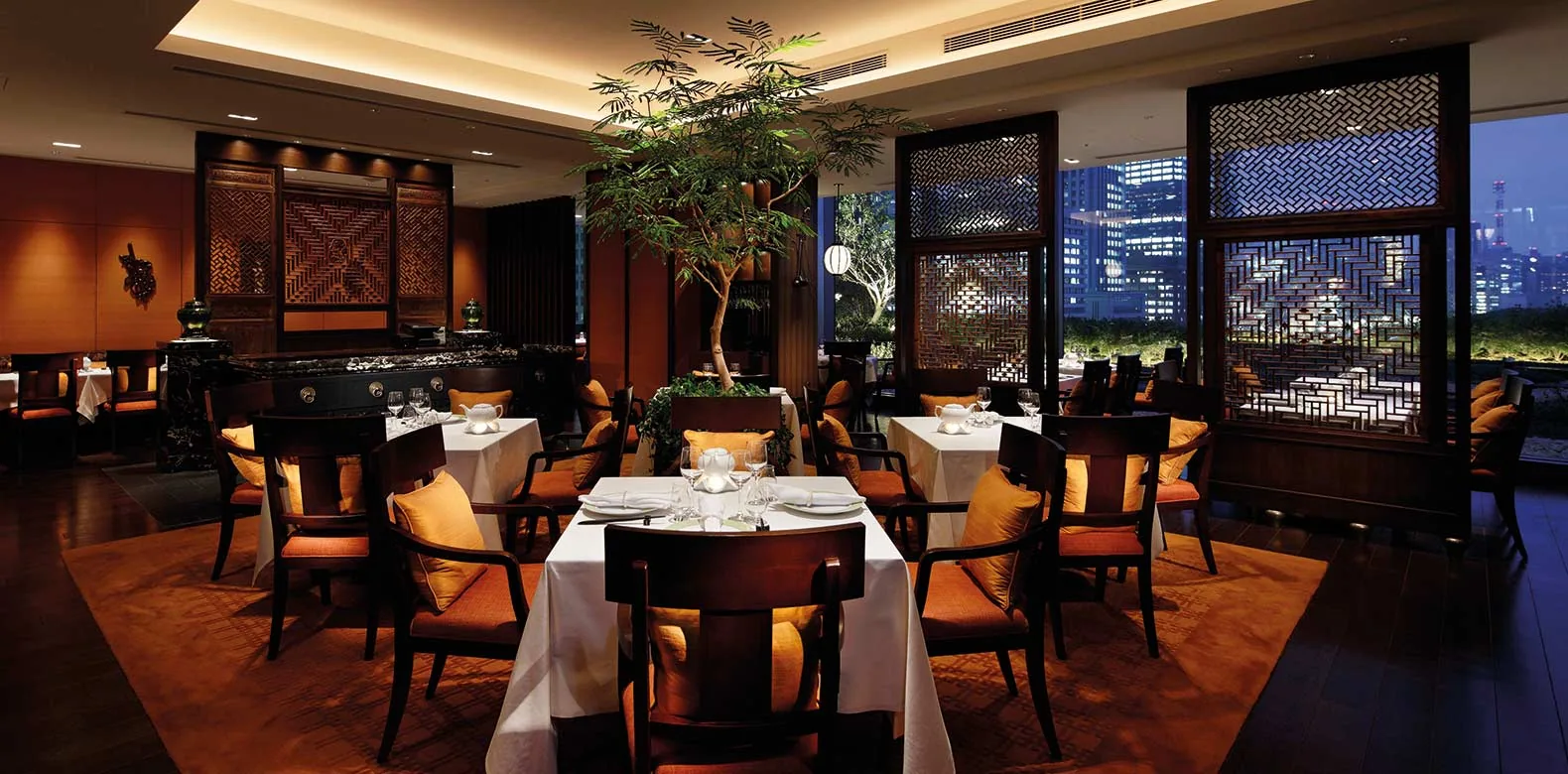
Amber Palace is the Chinese restaurant on the 5th floor of Palace Hotel Tokyo in Marunouchi, cooking Cantonese and Shanghainese dishes around a theme of tradition and quality made modern and fresh. The look is Old World China, with antique wood paneling, traditional musical instruments on display and an amber color scheme throughout. The dining room seats 108, and four private rooms, three with round tables, seat eight to ten each and connect to take groups of up to 30.
Dedicated dim sum and roast chefs work in the kitchen, so dumplings arrive freshly steamed and roasts come straight from the oven. Crispy Peking duck is the house specialty and anchors most of the set courses, with steamed abalone and bird's nest around it, and lighter lunches open with three kinds of dim sum and a Guangzhou-style soup. Lunch is served daily from 11:30 with last orders at 2:30 pm, and dinner from 5:30 pm with last orders at 9 pm. The dress code is smart casual, and the hotel asks guests to avoid sleeveless tops and beach or slide sandals.
See Amber Palace.
Best for: a Peking duck dinner in Marunouchi, or a private-room celebration for up to 30.
5. Toh-Ka-Lin (The Okura Tokyo)
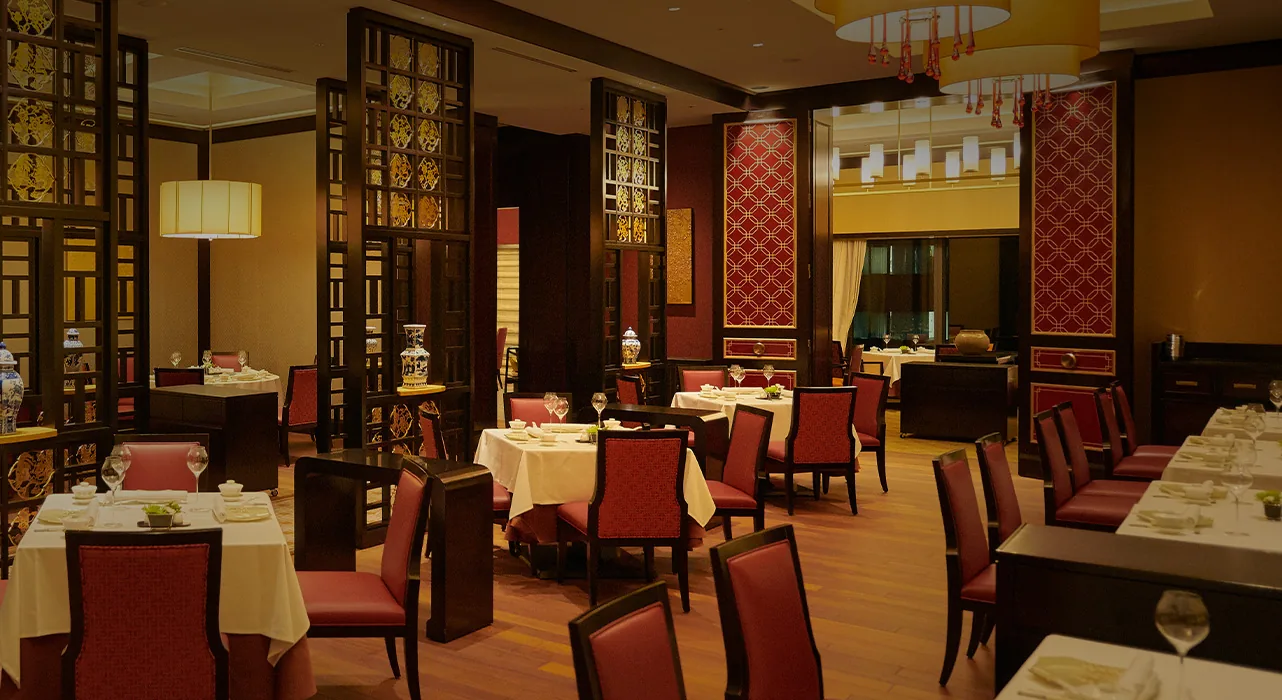
Toh-Ka-Lin is the Cantonese fine dining room of The Okura Tokyo, on the sixth floor of the Prestige Tower in Toranomon. The kitchen is led by Grand Chef Ryusei Chin, whose honors include Japan's Medal with Yellow Ribbon and a Contemporary Master Craftsman Award in 2021, and the cooking holds to classic Cantonese technique built on seasonal Japanese produce. The room is finished in deep red with ornate gold accents and a peach blossom motif of golden flowers along the walls, with vases from Jingdezhen, the historic Chinese porcelain center, displayed throughout and an antique medicine cabinet at the entrance. Eight private rooms seat from four to 14 guests, among them Togen, painted with scenes of a mythical paradise.
The grand menu covers the Cantonese canon: roast duck with plum sauce, cha siu roast pork, bird's nest soup, braised whole shark fin and braised abalone with oyster sauce, with some dishes finished at the table. The hotel names jellyfish sashimi and braised whole abalone among its signatures, and set courses are served for two guests or more. Lunch is served daily from 11:30, until 14:30 on weekdays and 15:30 on weekends and national holidays, and dinner begins at 17:30, with last orders at 21:00. Dress is smart casual, with no shorts, sandals, sleeveless shirts for men, or hats.
See Toh-Ka-Lin.
Best for: a classic Cantonese banquet in a private room.
6. Chinaroom (Grand Hyatt Tokyo)
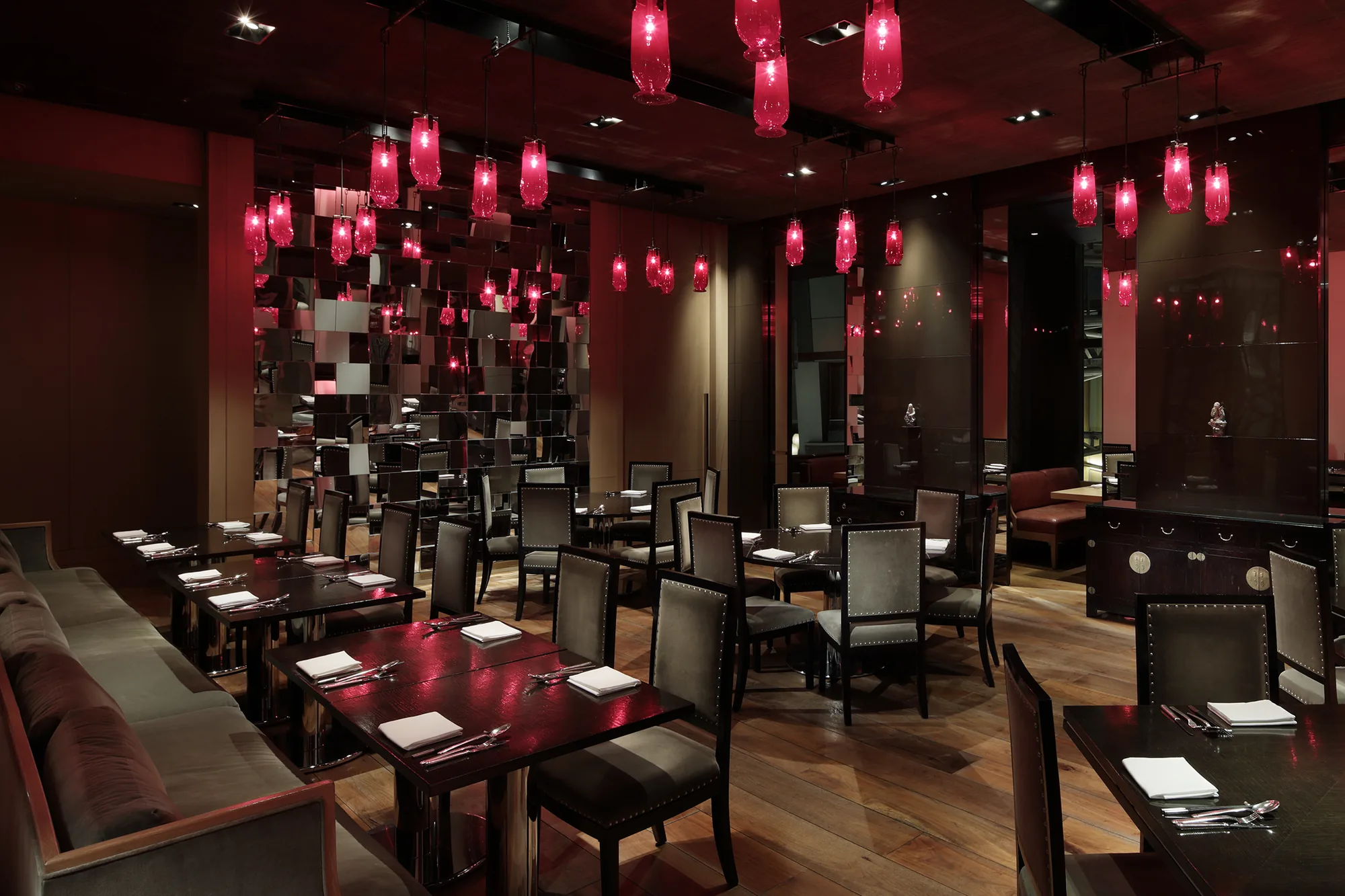
Chinaroom is the Chinese restaurant on the sixth floor of Grand Hyatt Tokyo in Roppongi Hills, cooking regional dishes from authentic recipes with a modern presentation. Chef de Cuisine Kazumasa Koike draws the menu from four culinary traditions, Beijing, Shanghai, Sichuan and Guangdong, and keeps fresh fish in a tank in the kitchen. The room was designed by the New York-based designer Tony Chi, with red lighting and red lanterns over the 93-seat dining room, and three private rooms take groups and celebrations: The Library for up to 30, The Red Room for up to 20 and Black And White for up to six.
Peking duck comes with the skin roasted crisp and carved into generous pieces. Truffle pork dumplings are made by hand by the dim sum chefs and filled with a truffle and collagen soup, and the chicken collagen noodle soup follows an old Chinese imperial court recipe, its broth of pork, duck, rooster, Kinka ham, scallops and chicken feet simmered for more than six hours. The kitchen also prepares bird's nest and Shanghai crab roe, seasonal courses come with Chinese teas, and A Touch of Heart is an order-style dim sum lunch, each piece cooked once ordered. Lunch runs from 11:30 to 14:30 on weekdays and from 11:00 to 15:00 on weekends and holidays, and dinner is served from 17:30 to 20:30.
See Chinaroom.
Best for: a group dinner in The Library, or a dim sum lunch in Roppongi.
7. Hei Fung Terrace (The Peninsula Tokyo)
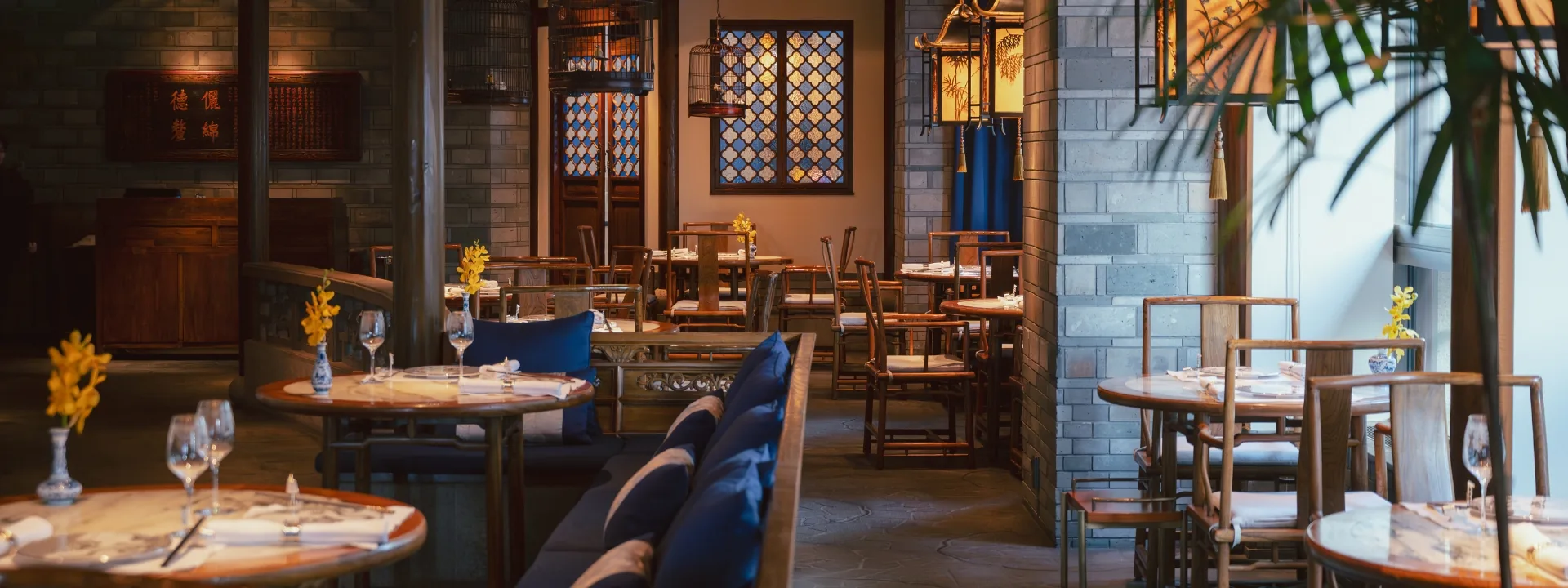
Hei Fung Terrace is the Cantonese restaurant on the second floor of The Peninsula Tokyo in Yurakucho, the hotel that stands opposite the Imperial Palace, and it is a Selected restaurant in the MICHELIN Guide Tokyo 2026. The kitchen centers on Cantonese classics, from dim sum made by hand to traditional dishes cooked with long-established technique. The dining room takes its cues from a classical Suzhou garden and is designed to feel serene and inward-looking, a space for quiet conversation, with private salons for groups and a Chef's Table that brings guests close to the heat and craft of the kitchen.
At lunch the dim sum masters set the pace, with Cantonese ikura siu mai, steamed duck dumplings with bamboo fungus and purple sweet potato, baked pineapple barbecued pork buns and Cantonese shrimp wonton noodle soup. The Chef's Signature Dinner moves from Cantonese barbecued appetizers to slow-braised Sanriku abalone in premium oyster sauce, wok-fried Hida beef sirloin with black pepper sauce and seafood fried rice with crab and ikura, closing on the house mango pudding and a baked egg tart. Lunch runs 11:30 to 14:30 Monday to Saturday and from 11:00 on Sundays and public holidays, with last order at 14:00, and dinner runs 17:30 to 22:00 daily, last order 21:00. The published dress code is smart casual.
See Hei Fung Terrace.
Best for: a handmade dim sum lunch opposite the Imperial Palace.
8. China Blue (Conrad Tokyo)
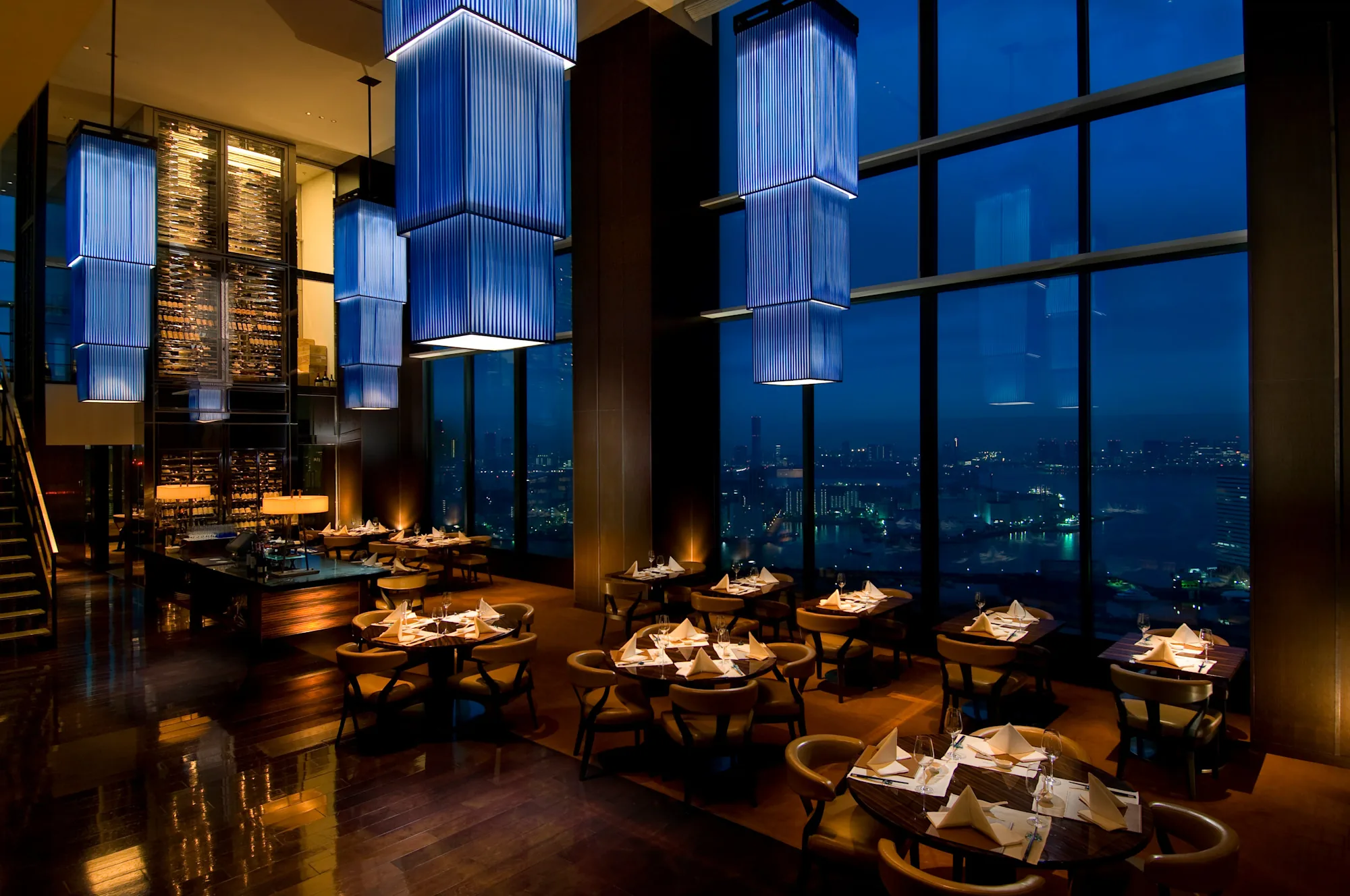
China Blue is the Cantonese restaurant on the 28th floor of Conrad Tokyo, at Higashi-Shimbashi in the Shiodome district, and its windows look straight out over Hama-Rikyu Gardens and Tokyo Bay. The dining room is finished in blue throughout, with a glass wine cellar about eight meters tall at its center. Three private rooms seat six to twelve: one with a panoramic bay view, a quieter enclosed room, and a round-table room with windows on two sides facing the bay area.
Head chef Chan Chi Wai, born in Hong Kong, came to Japan in 1995 and joined Conrad Tokyo in 2006, and seafood is his specialty; his own signature is a lobster white spring roll. The a la carte menu includes the China Blue Tokyo Duck, wrapped with dried tofu skin in a black sesame crepe, along with mapo tofu and a trio of dim sum, and dinner also runs as seven-course menus. Lunch is served daily from 12:00, last order 14:00, and dinner from 17:30, last order 21:00; daytime tables catch the green of the gardens, while evening brings the lights of the bay. The published dress code is smart casual, and tank tops and beach sandals are not permitted.
See China Blue.
Best for: a seafood-led Cantonese dinner over Tokyo Bay.
9. Hu Jing (Janu Tokyo)
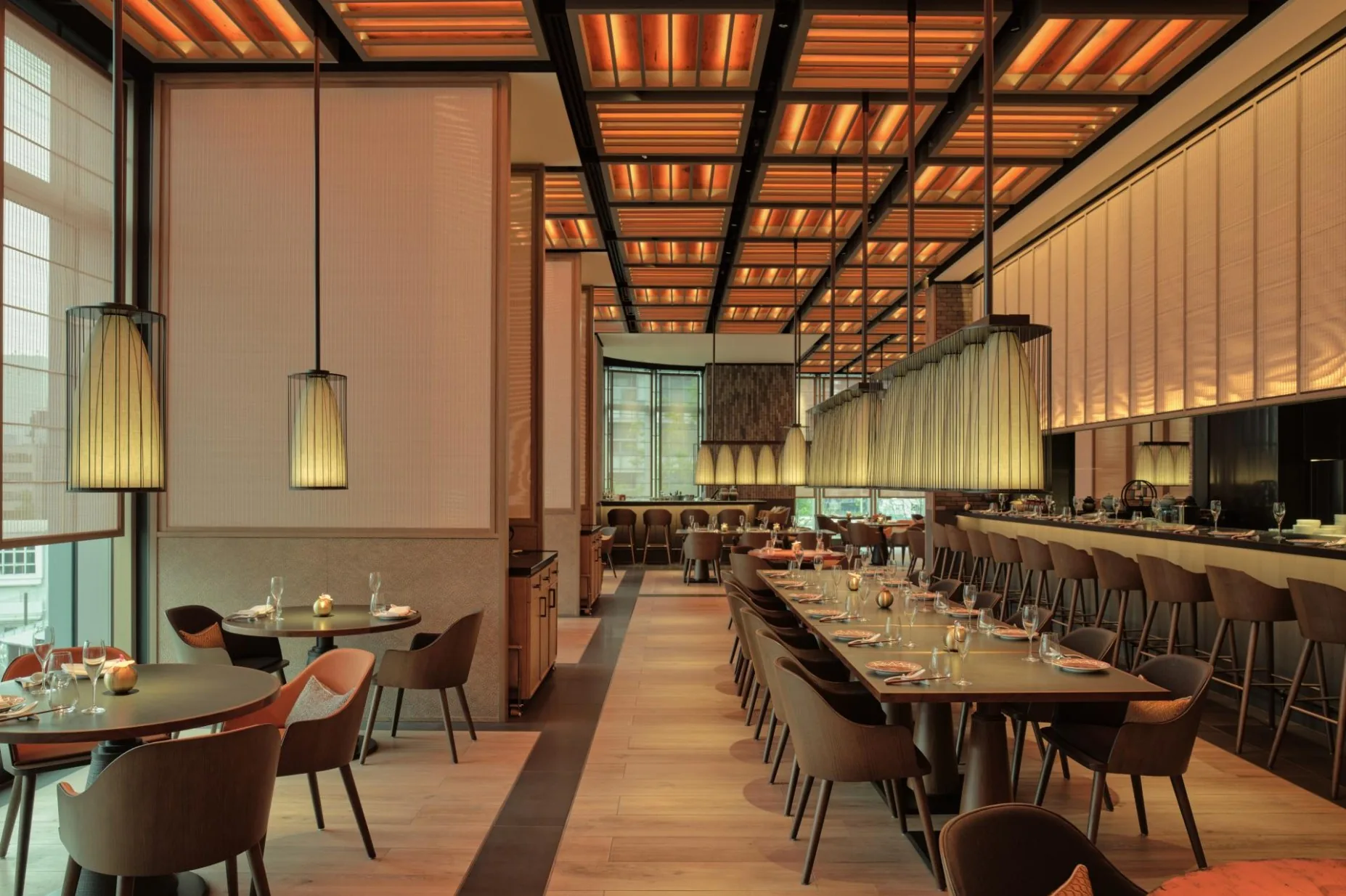
Hu Jing is the Chinese restaurant of Janu Tokyo, on the hotel's fifth floor at Azabudai Hills in Minato. Chef Yusuke Yamaguchi, who built his reputation in kitchens in China and Japan, cooks with Cantonese technique and Japanese ingredients, reworking traditional dishes from across China for a contemporary table. The main dining room is arranged around an open kitchen, and four private dining rooms finished in auspicious shades of red seat from two to ten guests for anniversaries, family celebrations and business dinners.
The signature is the Hu Jing Style Peking Duck, served two ways as a duck roll and duck rillettes with caviar, and the Kuroge Wagyu fillet is wok-fried with Penja black pepper and black garlic sauce. The house list runs to Buddha Jumps Over the Wall soup, a Hangzhou-style braised pork belly pyramid, Sichuan-style poached chicken in a spicy sauce and Hu Jing Style xiao long bao, with more than 60 a la carte dishes alongside the set courses, a full vegan set menu and a wine list with a strong natural-wine selection. Lunch begins at 11:30am and dinner at 5:30pm every day, with last dinner orders at 9pm. The celebration menu for the private rooms is taken on bookings made at least five days ahead.
See Hu Jing.
Best for: a modern Chinese dinner with a vegan option, or a private-room anniversary.
How to book
Each restaurant's page has its booking link. Sense books through SevenRooms and the other eight through TableCheck. Sazenka opens bookings on the 1st of each month for dates through the end of the month two months ahead, and its private rooms are booked on a separate page linked from the restaurant's own reservation page.
Some bookings go to the restaurant directly: parties of 11 or more and private rooms at Akasaka Shisen Hanten, and parties of seven or more and private rooms at Amber Palace, whose online bookings cover dining-room tables of up to six. The Premiere course at Akasaka Shisen Hanten is reserved by the day before, and the Hu Jing celebration menu for the private rooms needs a booking at least five days ahead.
FAQ
Which restaurant on this list carries the highest MICHELIN distinction for 2026?
Sazenka in Minamiazabu holds three MICHELIN stars in the MICHELIN Guide Tokyo 2026, and Hei Fung Terrace at The Peninsula Tokyo is a Selected restaurant in the MICHELIN Guide Tokyo 2026.
Which Tokyo Chinese restaurants serve Peking duck?
Crispy Peking duck is the house specialty at Amber Palace and anchors most of its set courses. Chinaroom roasts the skin crisp and carves it into generous pieces, and Hu Jing serves its Hu Jing Style Peking Duck two ways, as a duck roll and duck rillettes with caviar.
Which of these restaurants serve dim sum?
Hei Fung Terrace builds its lunch around dim sum made by hand, Chinaroom serves A Touch of Heart, an order-style dim sum lunch with each piece cooked once ordered, and Sense adds a dim sum menu at weekend and public holiday lunches. Amber Palace keeps dedicated dim sum chefs, and its lighter lunches open with three kinds of dim sum.
Which Chinese restaurant suits a large group?
Akasaka Shisen Hanten's fifth-floor private rooms and banquet halls take parties from eight to 130 guests. Chinaroom's The Library seats up to 30, and Amber Palace connects its four private rooms for groups of up to 30.
Build a custom itinerary with our concierge team. Pair the venues mentioned above into a single concierge-confirmed evening. See the full Las Vegas events calendar for every upcoming DJ and pool party across the city.
More from Tokyo
- The 16 Best French Restaurants in Tokyo (2026) · Sixteen French restaurants in Tokyo for 2026, each holding at least one star in the MICHELIN Guide Tokyo 2026, from Ginza and Yebisu Garden Place to Asakusa and the Imperial Hotel.
- The 9 Best Italian Restaurants in Tokyo (2026) · Nine Italian restaurants in Tokyo for 2026, from Massimo Bottura's Gucci Osteria in Ginza to hotel dining rooms high above Otemachi, Yaesu and Marunouchi.
- The 16 Best Japanese Restaurants in Tokyo (2026) · Sixteen Japanese restaurants in Tokyo, from RyuGin and Kagurazaka Ishikawa, both with three MICHELIN stars in the MICHELIN Guide Tokyo 2026, to Ginza tempura and hotel kaiseki rooms.
- The 17 Best Nightclubs in Tokyo (2026) · Seventeen Tokyo nightclubs for a VIP table in 2026, from Zouk Tokyo in Ginza and WARP Shinjuku in Kabukicho to WOMB in Shibuya and the Roppongi clubs.
- The 16 Best Restaurants in Tokyo (2026) · Sixteen Tokyo restaurants for 2026, from French, kaiseki and Chinese dining rooms holding three stars in the MICHELIN Guide Tokyo 2026 to a two-floor Japanese restaurant in Nishi-Azabu open until 3:30 in the morning.
- The 16 Best Restaurants with a View in Tokyo (2026) · Sixteen Tokyo dining rooms with a view, from the 24th floor of The Peninsula Tokyo to the 52nd floor of Park Hyatt Tokyo and Floor 345 of the Tokyo Skytree Tembo Deck.
Plan a night in another city
Browse all MyRSVP editorials · Back to home