The 13 Best Wagyu Restaurants in Tokyo (2026)
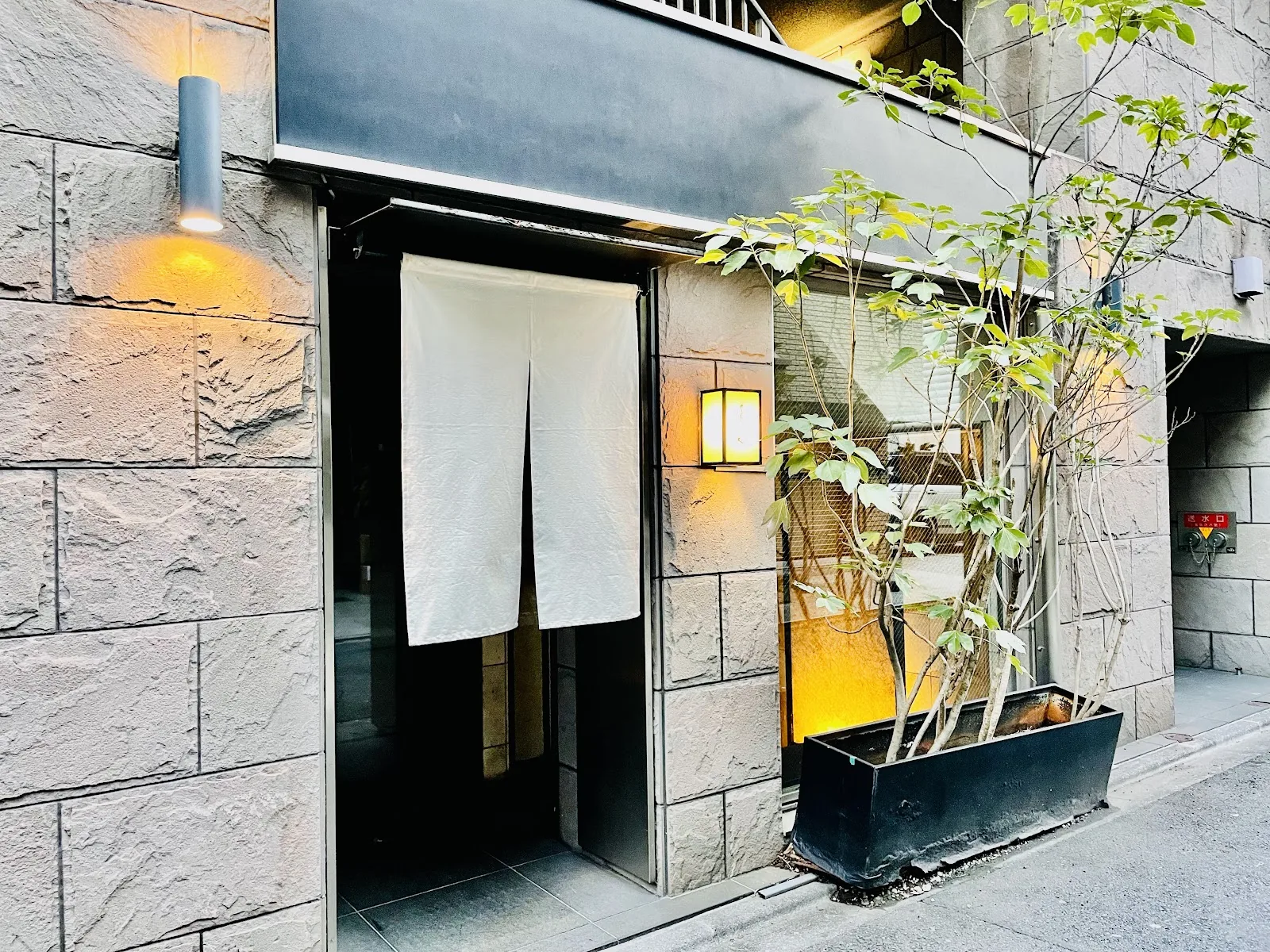
Thirteen wagyu restaurants in Tokyo, from Yoroniku's yakiniku in Minami-Aoyama to Kobe beef roasted in a kiln in Akasaka and teppanyaki counters high above the city.
Why we wrote this guide
Wagyu in Tokyo comes to the table in several ways, and each suits a different kind of evening. Yakiniku rooms put a grill at every table and work through the animal cut by cut, from tongue to Chateaubriand. Teppanyaki counters, several of them in the city's hotels, cook Japanese Black beef on the griddle in front of each guest, often beside lobster and abalone. Then there are the specialists: a Kobe beef room in Akasaka that roasts its steak in a kiln, and a Roppongi shabu-shabu house founded in 1961.
All of these restaurants take online bookings, and several hold tables for a set time or ask the whole party to order the same course, so it pays to read each restaurant's page before choosing a night. Outside Las Vegas the restaurant reservation sits with the venue, not with us.
Last updated November 2026.
The ranked guide
1. Yoroniku (Minami-Aoyama)
Yoroniku is the wagyu yakiniku restaurant of Hideyuki Kuwahara, on the basement floor of the Luna Rossa building in Minami-Aoyama, about a 10-minute walk from Omotesando Station. Kuwahara trained at Yakiniku Jumbo before opening Yoroniku here in 2007, and it holds a Bronze in The Tabelog Award 2026 and a place in Tabelog's Grill TOKYO 100 for 2026. The room seats 80 on a single floor, with private rooms from two guests up to groups of more than 30.
Kuwahara builds yakiniku into a long tasting run, and the house signature is Truffle Sukiyaki, wagyu served under a heaped portion of truffle. The classic course moves from two kinds of beef sashimi and yukhoe through salt-grilled heart, premium tongue and outside skirt to Chateaubriand and silk loin grilled rare, zabuton sukiyaki and Awa hand-stretched somen, with shaved ice to finish. Dinner runs nightly from 17:00 to midnight, all year, and tables are held for 150 minutes.
See Yoroniku.
Best for: a long yakiniku dinner with friends who want the full tasting run.
2. Ginza Ukai-tei (Ginza)
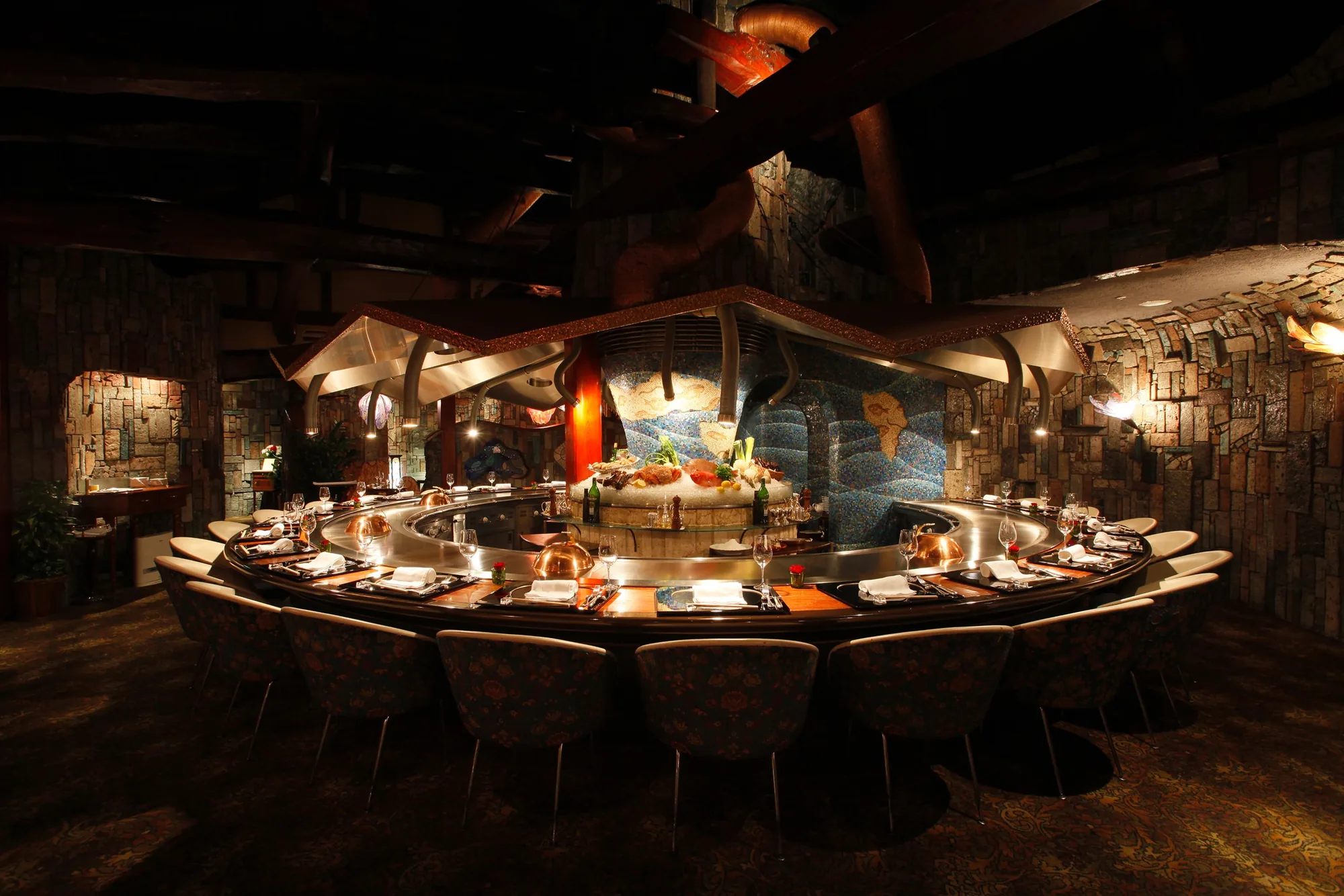
Ginza Ukai-tei is a teppanyaki restaurant on the ground floor of the Jiji Press Building at 5-15-8 Ginza, open since December 2003. The interior takes its theme from the Meiji-era opening to the West, with a hundred-year-old zelkova beam, a mosaic wall, Japanese and Western antique furniture and Art Nouveau detail. The main counter is a circular griddle designed around an image of the deep sea, and each private room has its own griddle and dedicated chef, with adjoining rooms connecting for up to 21 guests.
Every course centers on Ukai Selected Beef, Japanese Black wagyu chosen by the house and served as sirloin or tenderloin steak, cooked in a style the restaurant describes as rooted in French cooking. The house specialty is abalone steamed in rock salt, and the Special Course sets it beside Japanese spiny lobster with caviar. Dessert and coffee follow in a separate lounge. Lunch and dinner run Monday to Saturday, and the restaurant closes on Sundays and two Mondays a month.
See Ginza Ukai-tei.
Best for: a business dinner in a private teppan room.
3. Yakiniku Jumbo Shirokane (Shirokane)
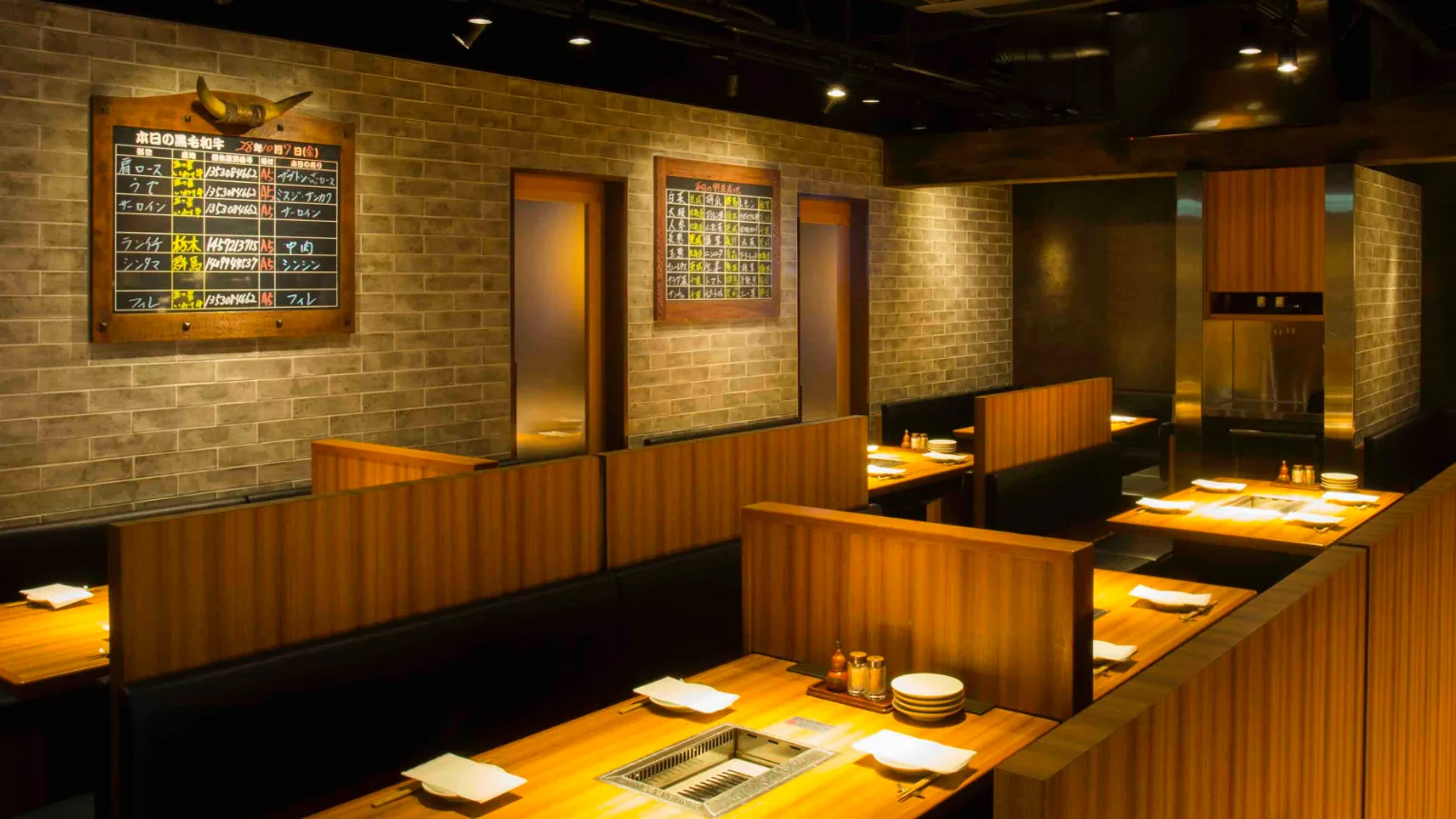
Yakiniku Jumbo Shirokane is a wagyu yakiniku restaurant on the ground floor of the Daiichi Azabu Building in Shirokane, Minato. Its meat buyers choose Japanese Black wagyu from producers across Japan, judging the beef by eye and buying cut by cut, and the menu is beef from beginning to end, from the prime cuts through the tongue to the offal. Each table has its own grill and guests cook most of the meat themselves, while staff grill the signature dish at the table.
That signature is the Sirloin Nohara-yaki, a sukiyaki-style slice of sirloin seared and dipped in raw egg from Aomori. The prime cuts run from marbled to lean, among them zabuton, misuji, ichibo and rump, a thick slice of superior Japanese Black wagyu tongue is limited to one per guest, and the offal list takes in beef heart, mino and shimacho. Dinner runs nightly from 5:00 pm with last orders at 10:00 pm, lunch is added on weekends and public holidays, and the restaurant is open year-round apart from December 31 to January 2.
See Yakiniku Jumbo Shirokane.
Best for: a classic yakiniku night built around the house sirloin.
4. Omotesando Ukai-tei (Omotesando GYRE)
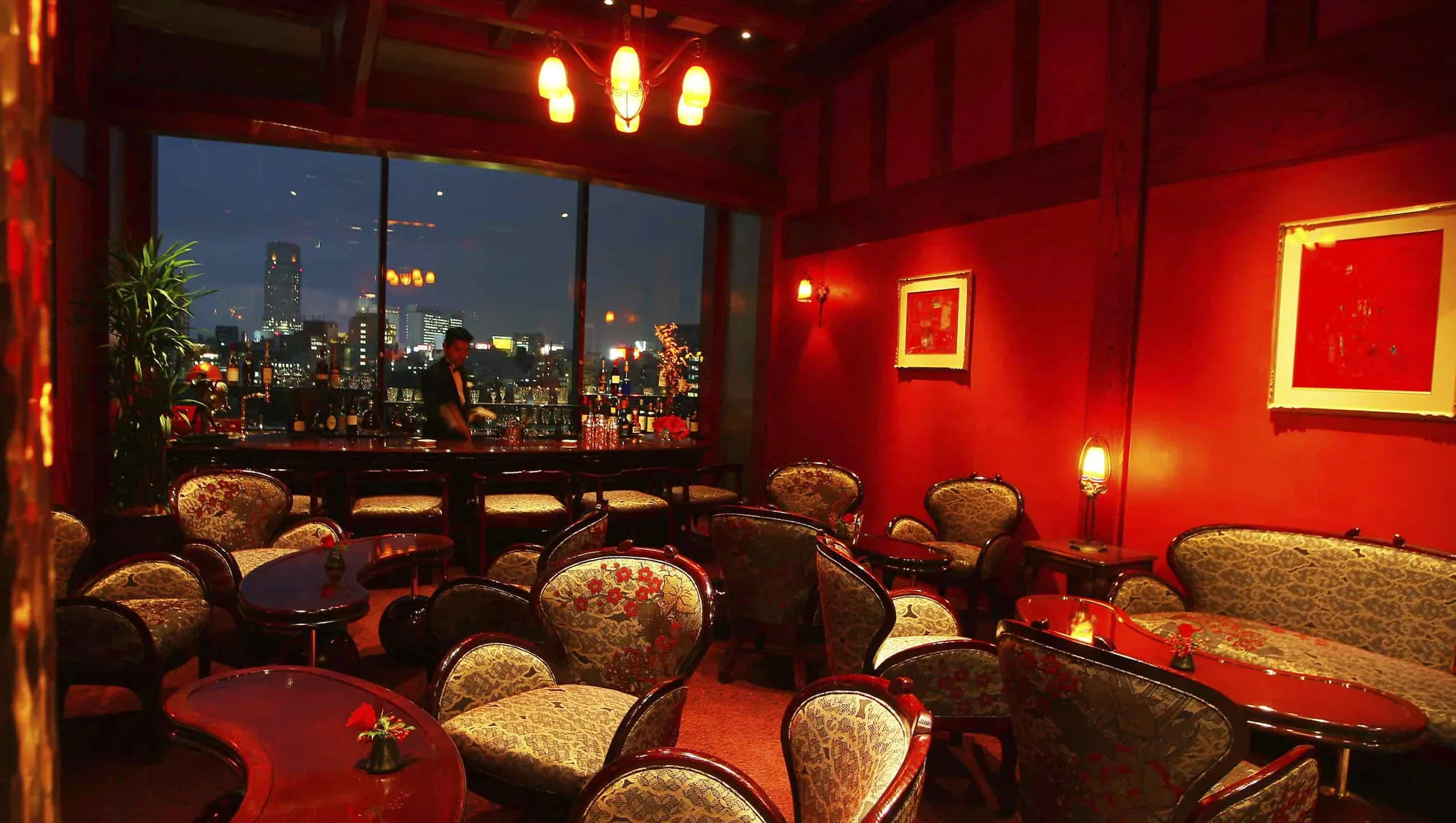
Omotesando Ukai-tei is a teppanyaki restaurant on the fifth floor of Omotesando GYRE in Jingumae, looking down over the zelkova trees of Omotesando avenue. The dining room is built from a merchant house of about 150 years old, moved from Kanazawa and reassembled with lacquered beams, walls of bengara red plaster and a mosaic wall, and furnished with Art Deco pieces and works by Rene Lalique. The circular counter carries a seigaiha wave mosaic, and glass-walled counter seats look out over Omotesando.
Courses center on Ukai Selected Beef, served as sirloin or tenderloin, and at lunch the steak comes with teppanyaki lobster or abalone. Dessert and coffee follow in an Art Nouveau lounge lined with windows over the city. Lunch and dinner are served every day except Wednesdays and two Tuesdays a month, and courses are served to tables of two or more.
See Omotesando Ukai-tei.
Best for: an anniversary lunch looking down Omotesando.
5. Kobe Beef 511 (Akasaka)
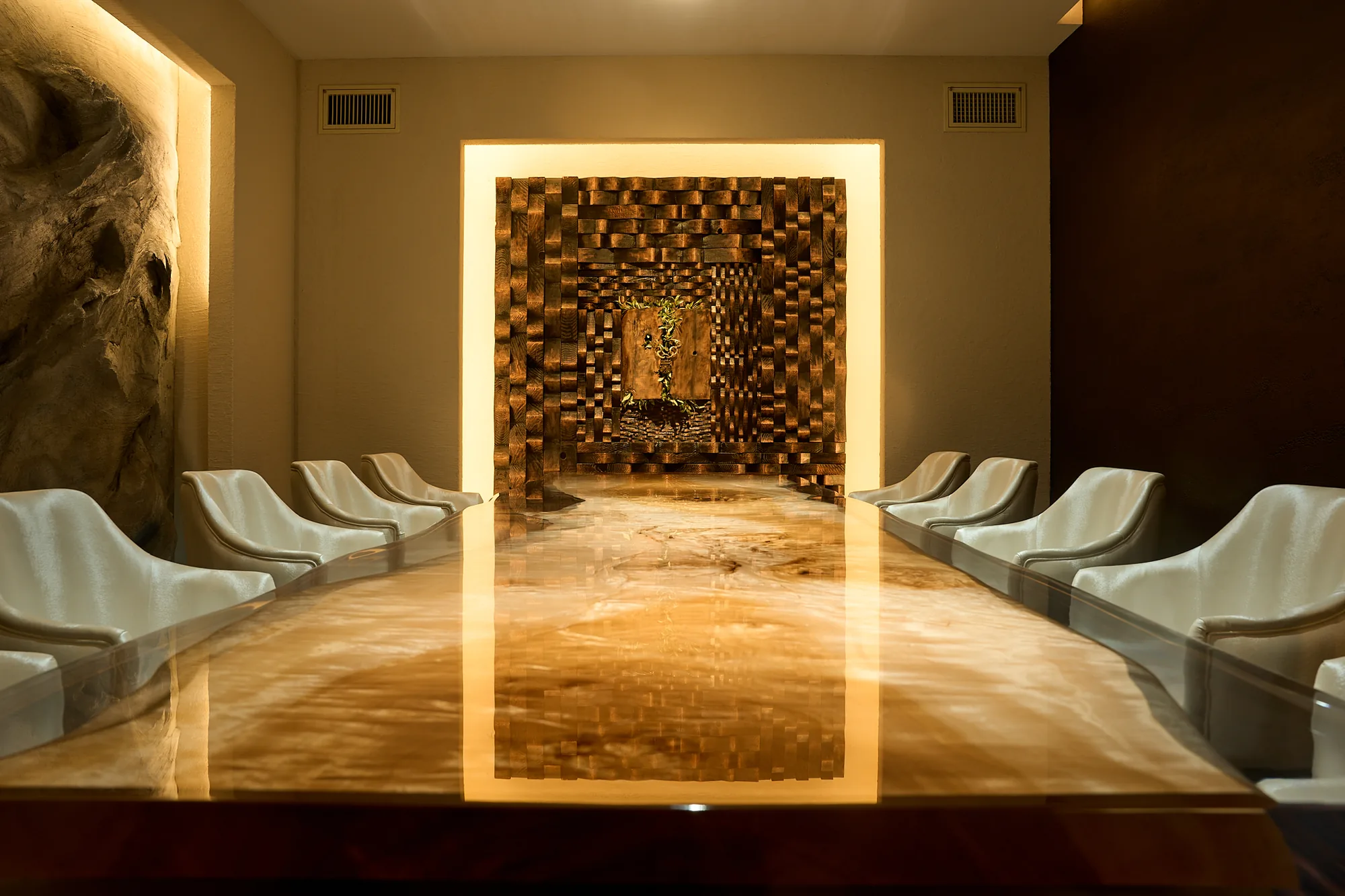
Kobe Beef 511 is a Kobe beef restaurant on the basement floor of the Dea Plaza Akasaka building at 4-3-28 Akasaka. It works only with Kobe beef graded BMS 11 or higher on the 12-point marbling scale, and builds its courses around steak roasted in its own high-temperature kiln. Every table sits in a private room, dressed with calligraphy by Yuna Okanishi and tables cut from single slabs of wood, and Kizashi, with custom rock walls, takes up to ten.
The kiln-baked courses move from Kobe beef poke or carpaccio and truffle-scented Akasaka soup dumplings to kiln-grilled sirloin, rib eye or a sirloin and filet pair, closing with Kobe beef sukiyaki over a bite of rice and matcha. The longer Hitotoki course adds sirloin with caviar, a filet cutlet with Perigueux sauce, two kinds of Kobe beef sushi and shabu-shabu in a golden consomme. Dinner is served Monday to Saturday from 5pm to midnight, with last orders for courses at 10:30pm.
See Kobe Beef 511.
Best for: a private-room Kobe beef dinner for a small group.
6. Seryna Honten (Roppongi)
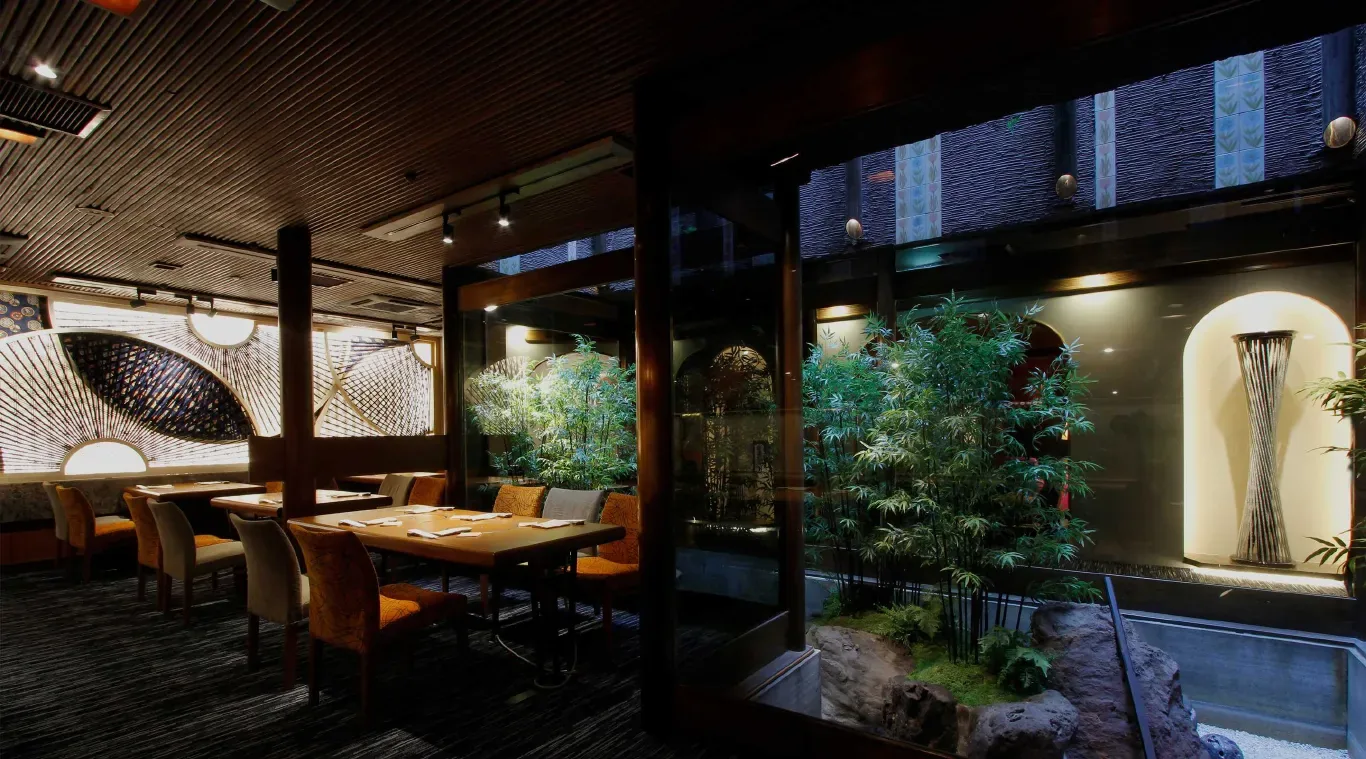
Seryna Honten is the flagship of Seryna, the shabu-shabu house founded in 1961, and fills three floors at 3-12-2 Roppongi, a minute on foot from Exit 5 of Roppongi Station on the Oedo line. It specializes in Kobe beef and crab shabu-shabu and is a designated registered outlet for Kobe beef. The ground floor holds a lounge and tables, and there are four private rooms on the second floor and seven more on the third, for two to sixteen guests.
Kobe beef shabu-shabu and Kobe beef sukiyaki lead the menu, joined by a combined wagyu and crab shabu-shabu, a charcoal-grilled Kobe beef sirloin and whole hairy crab, and at lunch an ishiyaki steak is cooked on a hot stone. Seryna Honten is open every day, for lunch from noon and dinner from 5pm. Parties with children aged three or under are seated in a private room.
See Seryna Honten.
Best for: business entertaining, anniversaries and family gatherings.
7. Yakiniku Ushigoro Nishiazabu (Nishi-Azabu)
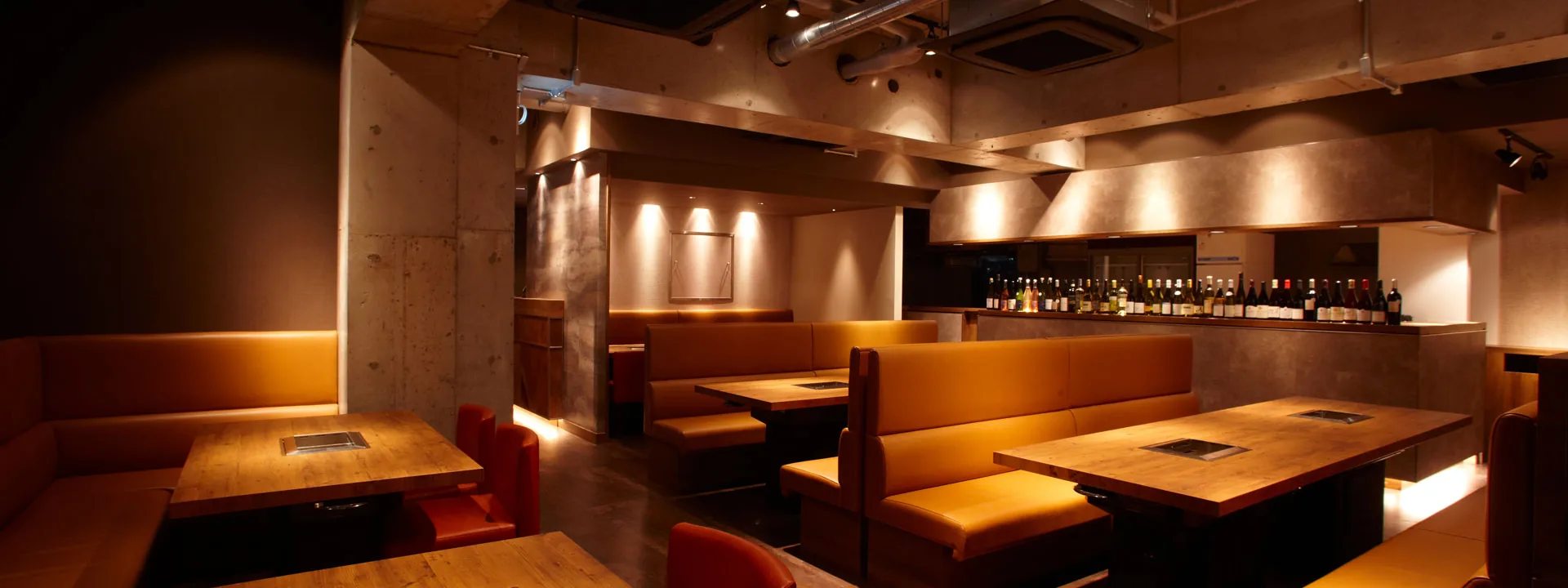
Yakiniku Ushigoro Nishiazabu is the flagship of the Ushigoro yakiniku restaurants, on the ground floor of the Barbizon73 building in Nishi-Azabu, six minutes on foot from Nogizaka Station and eight from Roppongi. It opened in April 2011, the kitchen buys only A5-rank Japanese Black wagyu, and it is listed in Tabelog's Grill TOKYO 100 for 2026. The 73-seat room mixes open tables and sofa seating with four semi-private rooms and one private room for up to eight.
The menu runs by cut. Kiwami no Tan is sliced thin from the root of the tongue, zabuton is seared sukiyaki style and served with egg yolk and a bite of rice, and thick-cut sirloin comes with smoked soy sauce, salt or grated daikon ponzu. The beef fillet cutlet sandwich is a house favorite, and four set courses cover the range for tables that want the kitchen to choose. It is open every day of the year until 23:30, from 16:00 on weekdays and 11:30 on weekends and holidays, and tables are held for two hours.
See Yakiniku Ushigoro Nishiazabu.
Best for: a late yakiniku dinner near Roppongi.
8. Sumibi Yakiniku Nakahara (GEMS Ichigaya, Rokubancho)
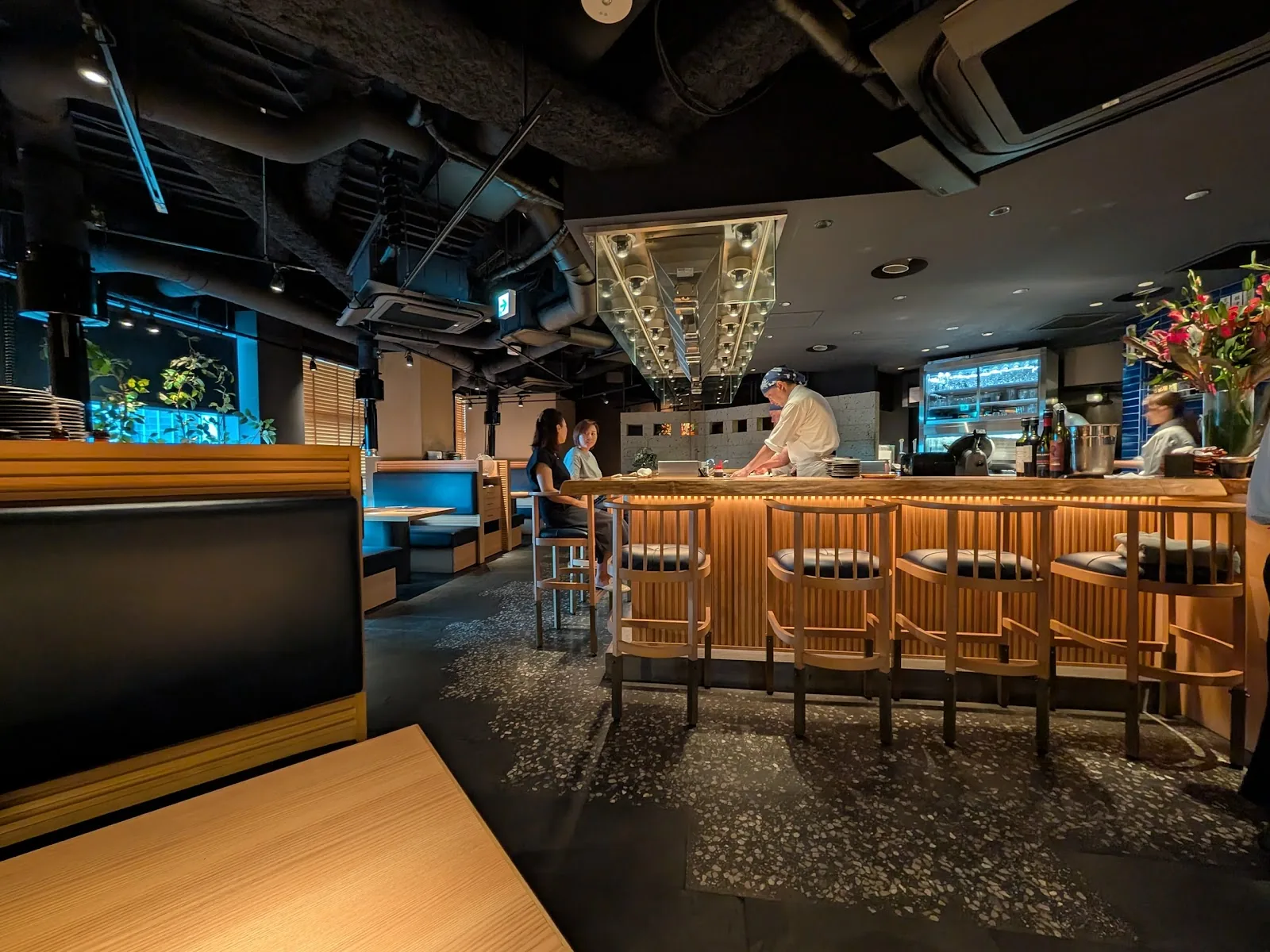
Sumibi Yakiniku Nakahara is Kentaro Nakahara's charcoal yakiniku restaurant on the 9th floor of the GEMS Ichigaya building in Rokubancho, Chiyoda, formerly known as Sumibiyaki Shichirin. It serves set courses alone, in two fixed seatings each night, and received a Bronze award in The Tabelog Award 2026. Guests sit at tables or at the counter, which takes groups of up to four, and the beef is cooked over charcoal.
Every course follows the same arc, from appetizer and a raw dish to soup, a finishing dish and dessert, and the meal opens with Korean-style squid sashimi and wagyu yukhoe. The Standard course is built around the house maboroshi tongue, a rare cut of Kuroge wagyu tongue, with offal, and the Special course adds the fillet katsu sandwich, which the restaurant says began here. Weekday seatings begin for the whole room at 6pm and 8:30pm, weekend and holiday seatings at 5pm and 7:30pm, so arriving on time matters, and the restaurant closes on Wednesdays.
See Sumibi Yakiniku Nakahara.
Best for: a serious yakiniku tasting for a party of up to four.
9. Teppanyaki Keyakizaka (Grand Hyatt Tokyo)
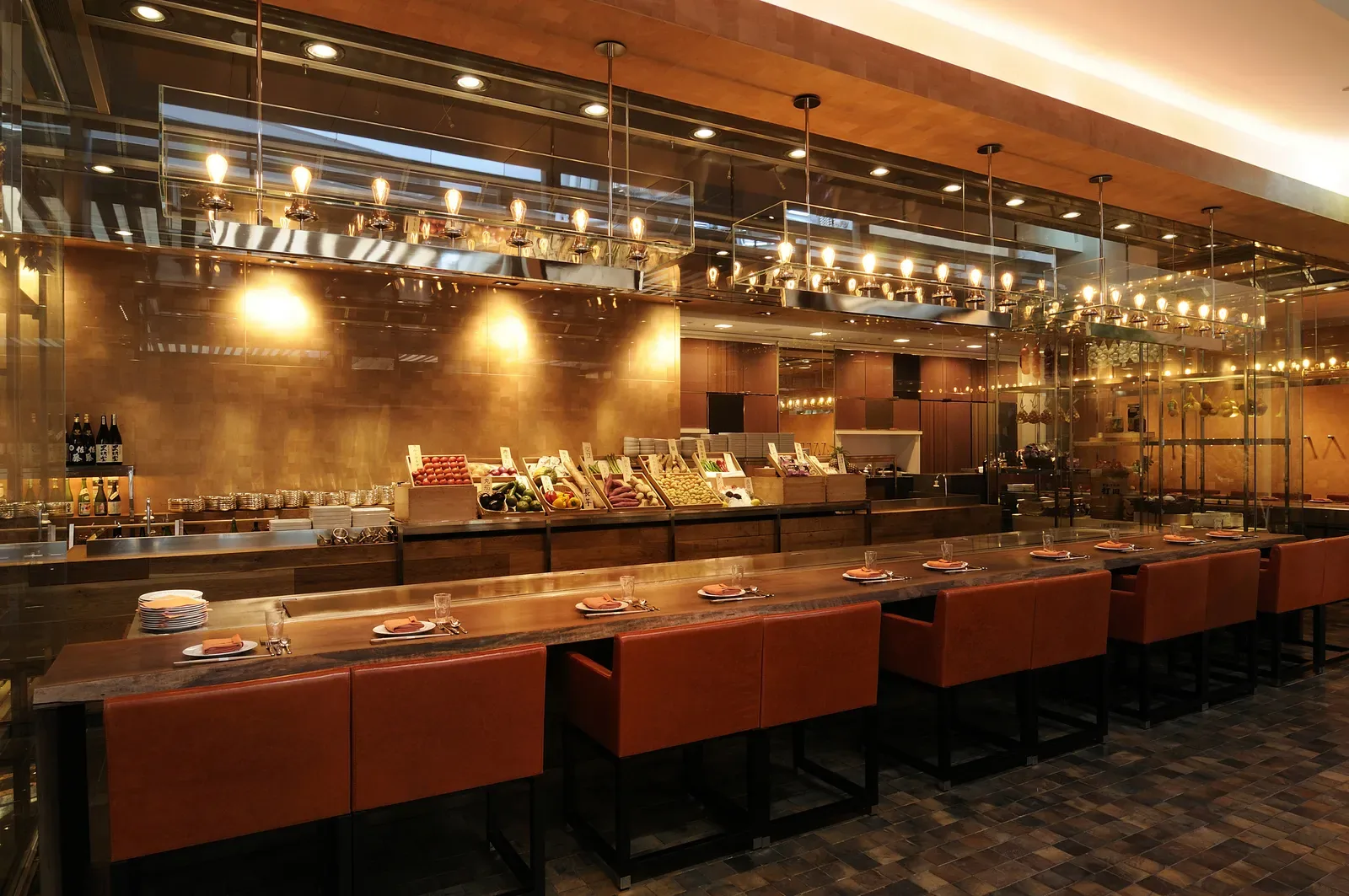
Keyakizaka is the teppanyaki restaurant of Grand Hyatt Tokyo, on the hotel's fourth floor in Roppongi Hills, reached through the sixth floor of the hotel or from the fourth floor of Roppongi Hills West Walk. Chef de Cuisine Yoshinobu Honda describes the cooking as a fusion of Japanese and Western techniques. The restaurant has 32 seats set around the teppan grills, and Kurumi, a private room for up to six, has its own teppan table where a chef cooks for the group alone.
Keyakizaka beef is an original wagyu: the chef developed the cattle's feed and works with a local farm that raises it, and it is served as tenderloin or sirloin alongside lobster and fish. Abalone is steamed on the teppan with seasonal vegetables, spiny lobster comes with the chef's own sauce, and a sommelier offers wine pairings. The menu runs a la carte or as one of four seasonal courses, and lunch and dinner are served daily.
See Teppanyaki Keyakizaka.
Best for: a birthday or business dinner for up to six in Kurumi.
10. Roppongi Ukai-tei (Roppongi Hills)
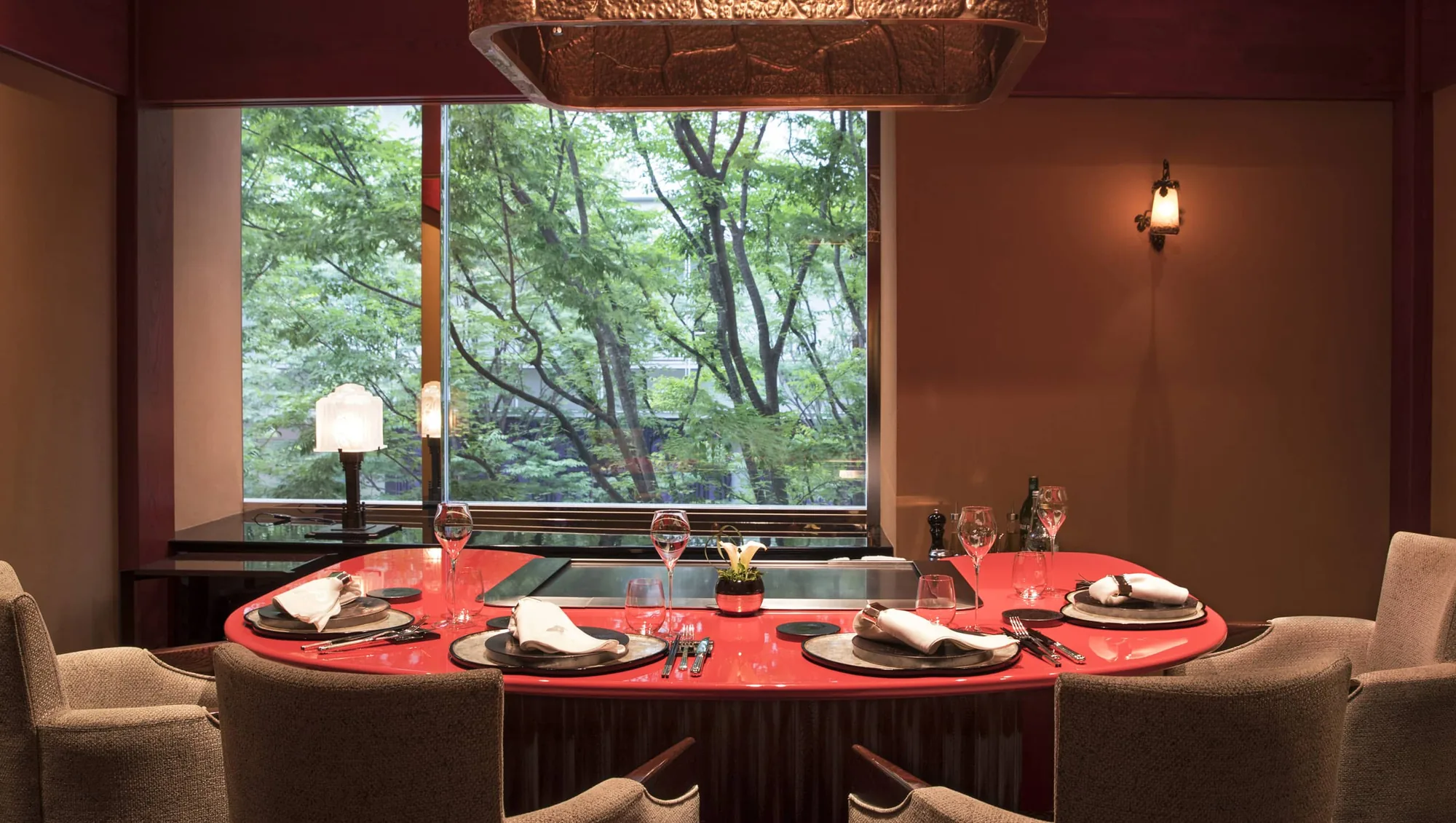
Roppongi Ukai-tei is a teppanyaki restaurant on the second floor of Roppongi Hills Residence D, looking out over Keyakizaka-dori. Every meal is a set course cooked on the griddle at a chef's table, and the room is dressed in traditional Japanese color, with a bright vermilion chef's table and gold-toned decoration. Private rooms each have their own grill counter and dedicated chef.
The beef is Ukai Gokujo, a wagyu raised over 34 months for Ukai-tei, served with lobster and seasonal fish. Lunch is a Selected Beef course with teppanyaki seafood or a course built on abalone steamed in rock salt, and dinner is omakase, including the Abalone and Supreme Beef course, a Roppongi exclusive. The restaurant closes on Mondays, everyone at a table orders the same course, and weekday dinner bookings are for parties without children under 12.
See Roppongi Ukai-tei.
Best for: a dinner with an important client, or an evening for two.
11. Teppanyaki Sazanka (The Okura Tokyo)
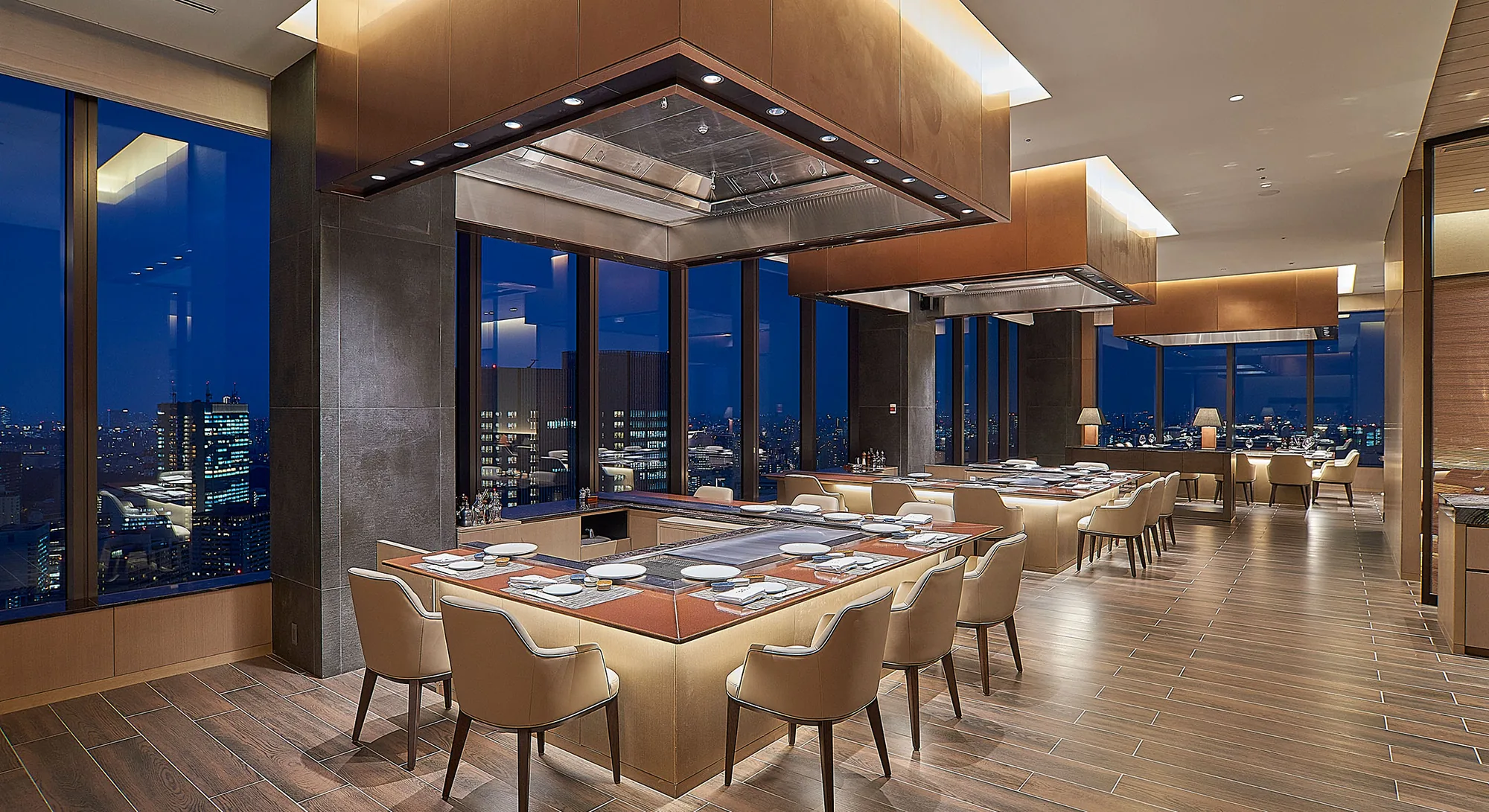
Teppanyaki Sazanka occupies the top floor of The Okura Tokyo, the 41st floor of the Prestige Tower in Toranomon. Guests sit at teppanyaki counters with the Minato skyline around them while chefs finish beef over brandy flames. The 80-seat restaurant has five private rooms for four to 14, and after the grill guests can move to a lounge in warm tones for dessert, coffee or a digestif.
Beef anchors every set menu, from Kobe wagyu fillet or sirloin to Kuroge wagyu and the hotel's own Okura beef, served with grilled seasonal vegetables, garlic rice made with garlic steeped in soy sauce for a full year, miso soup and pickles. The Kobe Wagyu Menu opens with abalone, while other courses lead with Japanese spiny lobster, prawn, crab or scallop. Lunch and dinner are served daily, a late dinner menu is offered from 20:00, and dress is smart casual, with no shorts, sandals, sleeveless shirts for men or hats.
See Teppanyaki Sazanka.
Best for: a Kobe beef dinner at a counter above the Minato skyline.
12. Sekishin-tei (Hotel New Otani Tokyo)
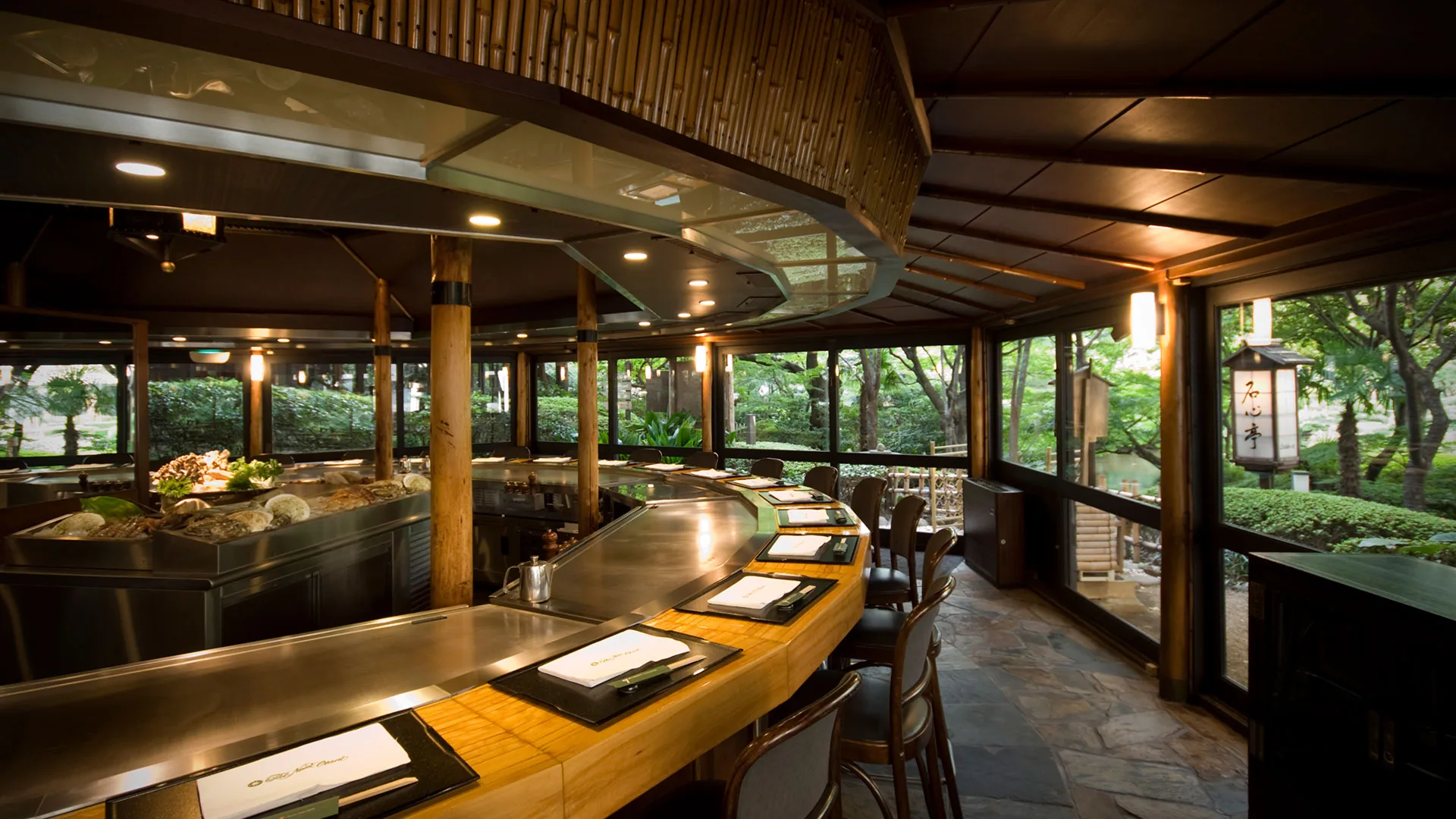
Sekishin-tei is the teppanyaki restaurant of Hotel New Otani Tokyo, set inside the hotel's 400-year-old Japanese garden in Kioicho. Guests walk out from the hotel buildings into the garden to reach it, and all 24 seats are at the counter, facing the grills and the chefs. When the main course is done, the party moves to Shogetsu-tei, the restaurant's quiet annex, for dessert.
Dinner runs through named courses: Benkei pairs scallop and lobster tail with a wagyu sirloin, Kioi moves from pepper-seared bluefin tuna and grilled spiny lobster to a wagyu filet, and Takumi opens with caviar and foie gras before salt-crusted abalone, seared beef sushi and a wagyu chateaubriand. Kobe beef loin from Kawagishi Ranch can replace the main, and the rice course is garlic rice or the house modanyaki. Lunch and dinner are served Tuesday to Sunday, with two dinner seatings on Sundays and holidays, and seats are held for 90 minutes at lunch and two hours at dinner.
See Sekishin-tei.
Best for: a counter dinner for two after a walk through the garden.
13. Teppanyaki Totsuji (Fairmont Tokyo)
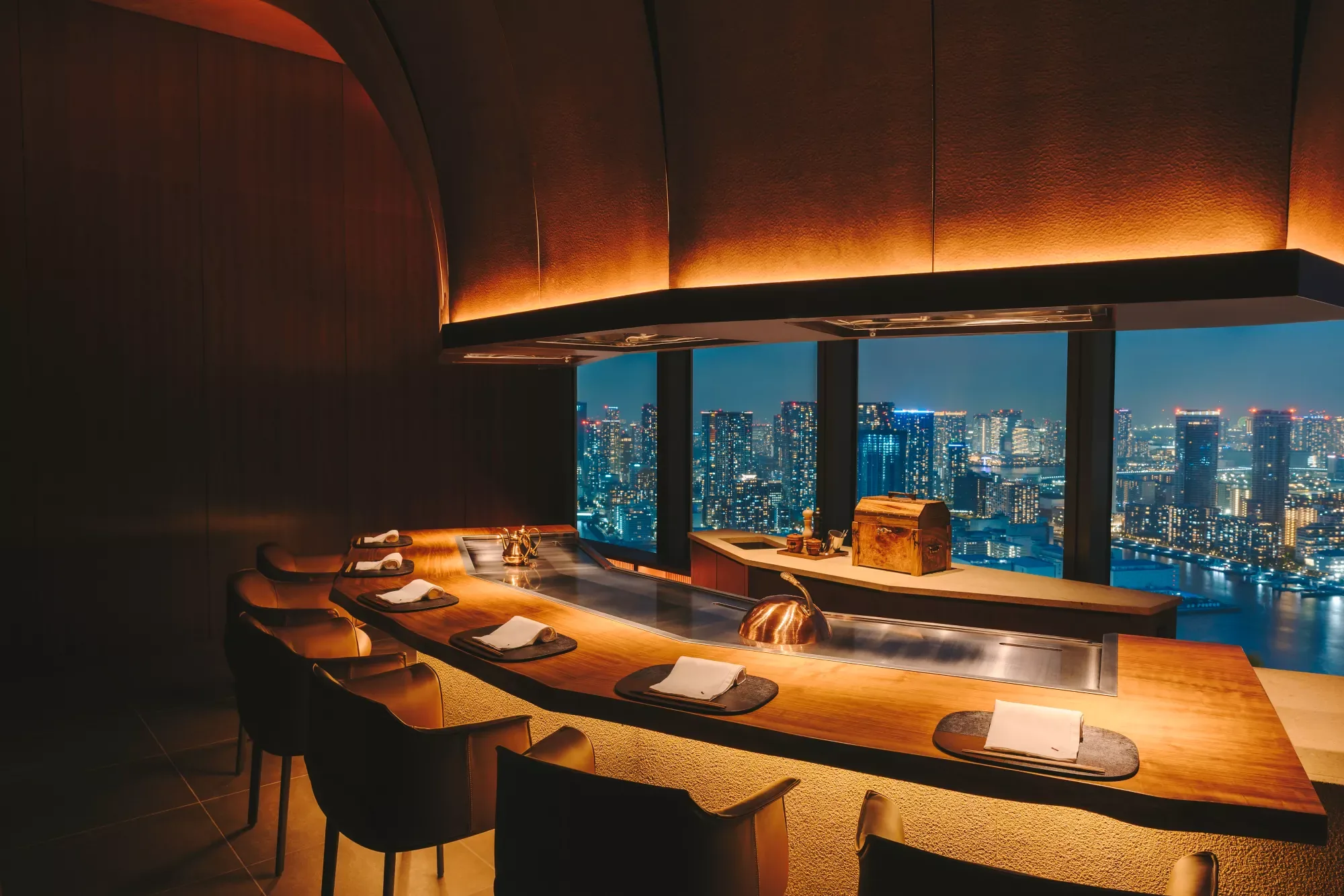
Totsuji is the teppanyaki restaurant of Fairmont Tokyo, on the hotel's 36th floor in Blue Front Shibaura Tower S, on the Shibaura waterfront, and the dining room looks out over Tokyo Bay. Head Chef Ryusuke Sato brings 18 years across teppanyaki, French and Western cooking, including kitchens he led in France. A private room seats up to six, and after the meal guests move to a lounge where dessert is finished in front of them with hojicha and the view across the bay.
Every course is chef's choice. Shinto, which the restaurant calls its most beloved course, centers on teppan-grilled live Ise lobster and Japanese Black wagyu fillet, Tosai pairs steamed live abalone with wagyu sirloin, and Akatsuki no toki brings together live abalone, spiny lobster and Kobe beef. Courses close with garlic rice or the house okonomiyaki with crisp Parmigiano, and a Meat Keep service lets guests reserve premium wagyu for the kitchen to store and age. Lunch and dinner are served Tuesday to Saturday.
See Teppanyaki Totsuji.
Best for: an anniversary dinner over Tokyo Bay.
How to book
Each restaurant's page has its booking link. Several set their own rules: Yoroniku, Roppongi Ukai-tei and Teppanyaki Totsuji have the whole party order the same course, and at Yoroniku the online booking is made by choosing that course. Yakiniku Jumbo Shirokane opens bookings one month ahead, limits them to one per person and needs a credit card, Ginza Ukai-tei opens tables three months ahead and Roppongi Ukai-tei two months ahead. Sumibi Yakiniku Nakahara takes a credit card at booking and does not accept debit cards, and parties of five or more there book two reservations and message the restaurant that they are one group. Larger groups at Omotesando Ukai-tei, Kobe Beef 511, Seryna Honten, Yakiniku Ushigoro Nishiazabu and Sekishin-tei book with the restaurant directly.
FAQ
Which of these restaurants serve Kobe beef?
Kobe Beef 511 works only with Kobe beef graded BMS 11 or higher, and Seryna Honten is a designated registered outlet for Kobe beef, serving it as shabu-shabu and sukiyaki. Teppanyaki Sazanka, Sekishin-tei and Teppanyaki Totsuji also offer Kobe beef among their courses.
What is the difference between the yakiniku and teppanyaki restaurants here?
At the yakiniku rooms, Yoroniku, Yakiniku Jumbo Shirokane, Yakiniku Ushigoro Nishiazabu and Sumibi Yakiniku Nakahara, the menu works through the beef cut by cut over a grill, and at Yakiniku Jumbo Shirokane each table has its own grill and guests cook most of the meat themselves. At the teppanyaki restaurants, from Ginza, Omotesando and Roppongi Ukai-tei to the hotel counters, a chef cooks on the griddle in front of each guest.
Which wagyu restaurants have a view?
Teppanyaki Sazanka is on the 41st floor of The Okura Tokyo with the Minato skyline around its counters, Teppanyaki Totsuji on the 36th floor of Fairmont Tokyo looks out over Tokyo Bay, and Omotesando Ukai-tei looks down over the zelkova trees of Omotesando avenue.
Which suit a private dinner?
Every table at Kobe Beef 511 sits in a private room. Ginza Ukai-tei and Roppongi Ukai-tei give each private room its own grill and chef, and Kurumi at Teppanyaki Keyakizaka has its own teppan table for up to six.
Build a custom itinerary with our concierge team. Pair the venues mentioned above into a single concierge-confirmed evening. See the full Las Vegas events calendar for every upcoming DJ and pool party across the city.
More from Tokyo
- MICHELIN-Starred Restaurants in Tokyo (2026): The 39 We Recommend · The 39 restaurants with three, two or one star in the MICHELIN Guide Tokyo 2026 that we recommend, from L'Effervescence and RyuGin to the French dining rooms of Ginza.
- Tokyo New Year's Eve 2026: Countdown Parties, Club Tables and Dinners · Where to spend New Year's Eve 2026 in Tokyo: the sky-bar countdown parties at Park Hyatt, Conrad and Mandarin Oriental, the club nights at Zouk Tokyo and WOMB, and the New Year's Eve dinners.
- The 9 Best Chinese Restaurants in Tokyo (2026) · Nine Chinese restaurants in Tokyo for 2026, from Sazenka's seasonal Chinese cooking in Minamiazabu to Akasaka Shisen Hanten's Sichuan and the Cantonese dining rooms of the city's grand hotels.
- The 16 Best French Restaurants in Tokyo (2026) · Sixteen French restaurants in Tokyo for 2026, each holding at least one star in the MICHELIN Guide Tokyo 2026, from Ginza and Yebisu Garden Place to Asakusa and the Imperial Hotel.
- The 9 Best Italian Restaurants in Tokyo (2026) · Nine Italian restaurants in Tokyo for 2026, from Massimo Bottura's Gucci Osteria in Ginza to hotel dining rooms high above Otemachi, Yaesu and Marunouchi.
- The 16 Best Japanese Restaurants in Tokyo (2026) · Sixteen Japanese restaurants in Tokyo, from RyuGin and Kagurazaka Ishikawa, both with three MICHELIN stars in the MICHELIN Guide Tokyo 2026, to Ginza tempura and hotel kaiseki rooms.
Plan a night in another city
Browse all MyRSVP editorials · Back to home