Mexico City Nightlife Guide (2026)
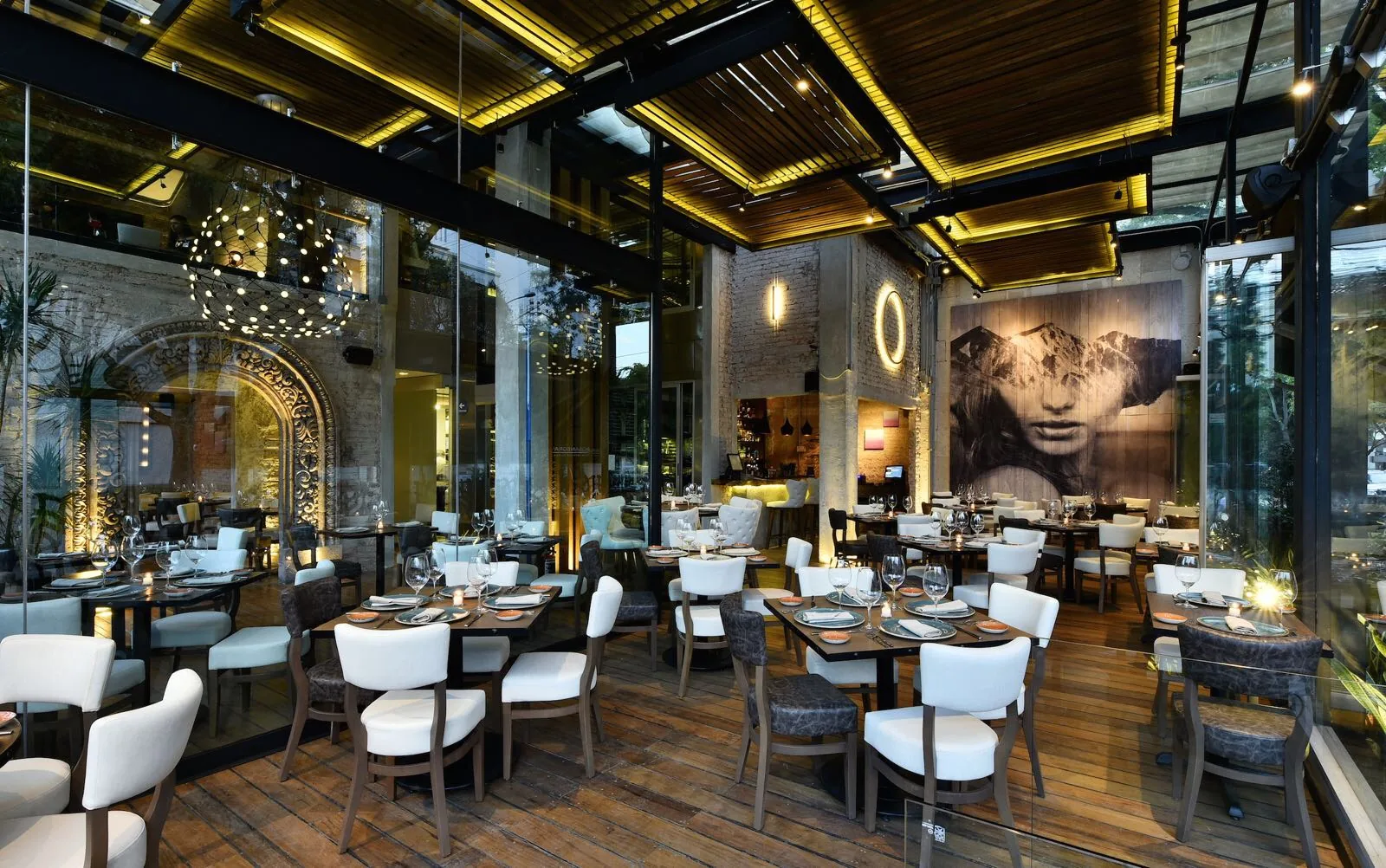
Mexico City is not a bottle-service city, and pretending otherwise ruins the night. The real luxury evening here is dinner-led: a long table, then a rooftop, then a club table placed by hand.
Let us be honest about what Mexico City is and is not. It is not Las Vegas and it is not Dubai. There is no strip of 2,000-capacity rooms competing on DJ fees, no published bottle-service minimums, no arms race of table packages. Anyone selling you that version of a Mexico City night is selling you a different city.
What Mexico City has instead is the best dinner-led night out in the Americas. The luxury evening here is built around a long table at a restaurant that knows how to escalate - a kitchen that is genuinely good, a room that gets louder as it goes, live music or a DJ dropped into the middle of service, and a closing time somewhere between one and two in the morning. The rooftop comes after. The club, if you want one, comes after that, and it stays the least formal part of the evening.
Understand that shape and the city opens up. Fight it and you will spend the evening looking for something that does not exist here.
The geography
Three areas carry almost all of it. Polanco, and specifically Avenida Presidente Masaryk, is where the scene-dining rooms cluster - it is the closest thing to a strip the city has, and you can walk between five of the biggest rooms in twenty minutes. Roma Norte and Condesa are younger, later and more chef-driven, with the drinking spread across many small bars. The Centro Historico and Juarez own the rooftops, because that is where the views are. Bosques de las Lomas and Santa Fe, out west, hold the newest of the international imports.
Start with a long table
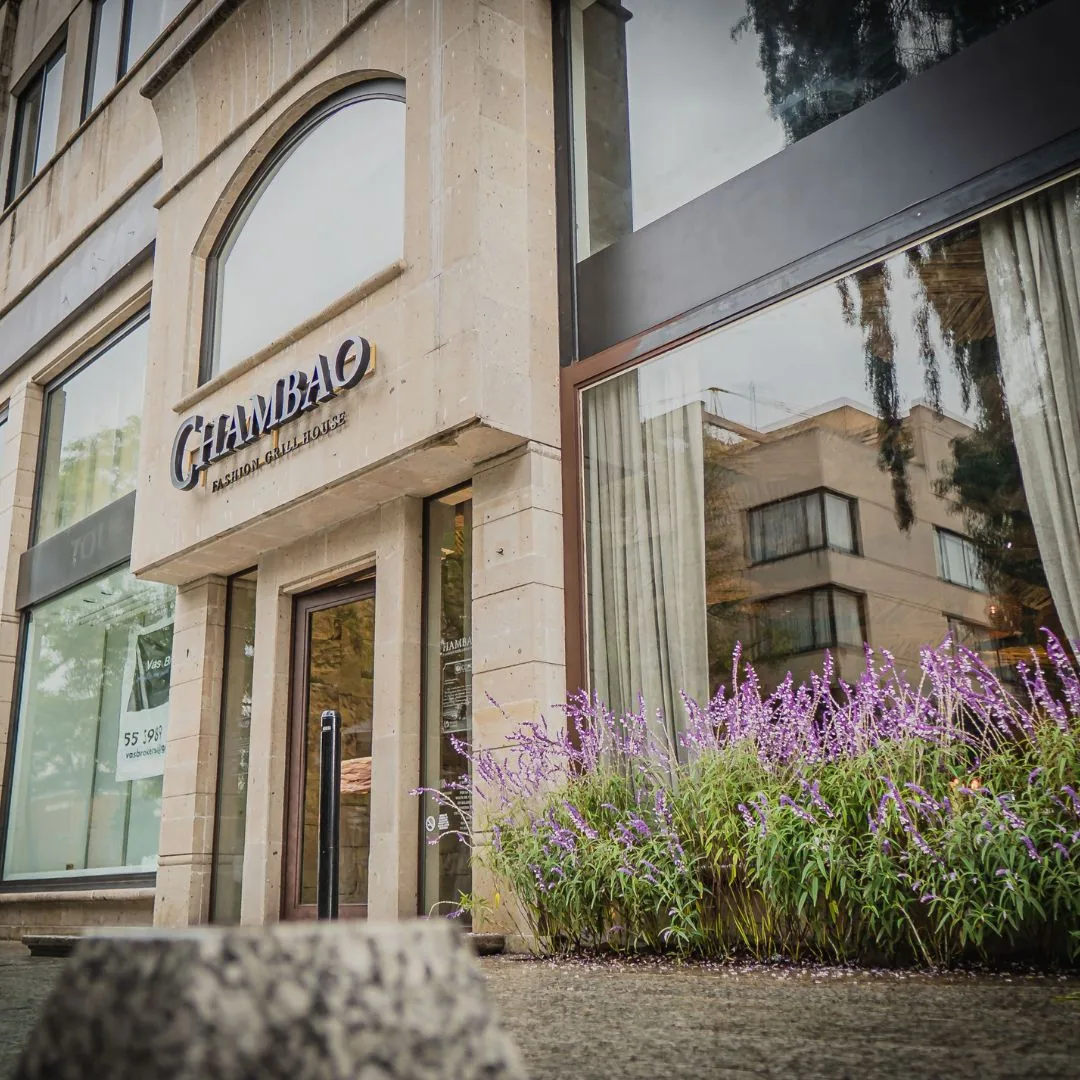
The scene-dining rooms are the engine of the night. Book one of these at 9 or 9:30 PM and the rest of the evening builds itself.
Three of the biggest rooms on Masaryk share the same formula. RosaNegra is the clearest expression of the formula: pan-Latin American sharing plates, premium charcoal-grilled cuts, low light, a soundtrack that rises through the night and live performance dropped into the middle of service. Doors at noon, close at 2 AM, every day of the week. Chambao is the group's grillhouse - aged beef from Creekstone Farms, Australian wagyu and Kobe against a raw bar and wood-grilled seafood, with showpiece plates that arrive with tableside theater, and an evening that escalates through a live DJ, flamenco guitar, runway walks and fire performers. Taboo Polanco is the Mediterranean supper club of the three, with Greek chef Athinagoras Kostakos on sea and fire: charcoal octopus, salt-baked fish flambeed at the table, tuna tartare, and an orzo with shrimp that half the city has copied.
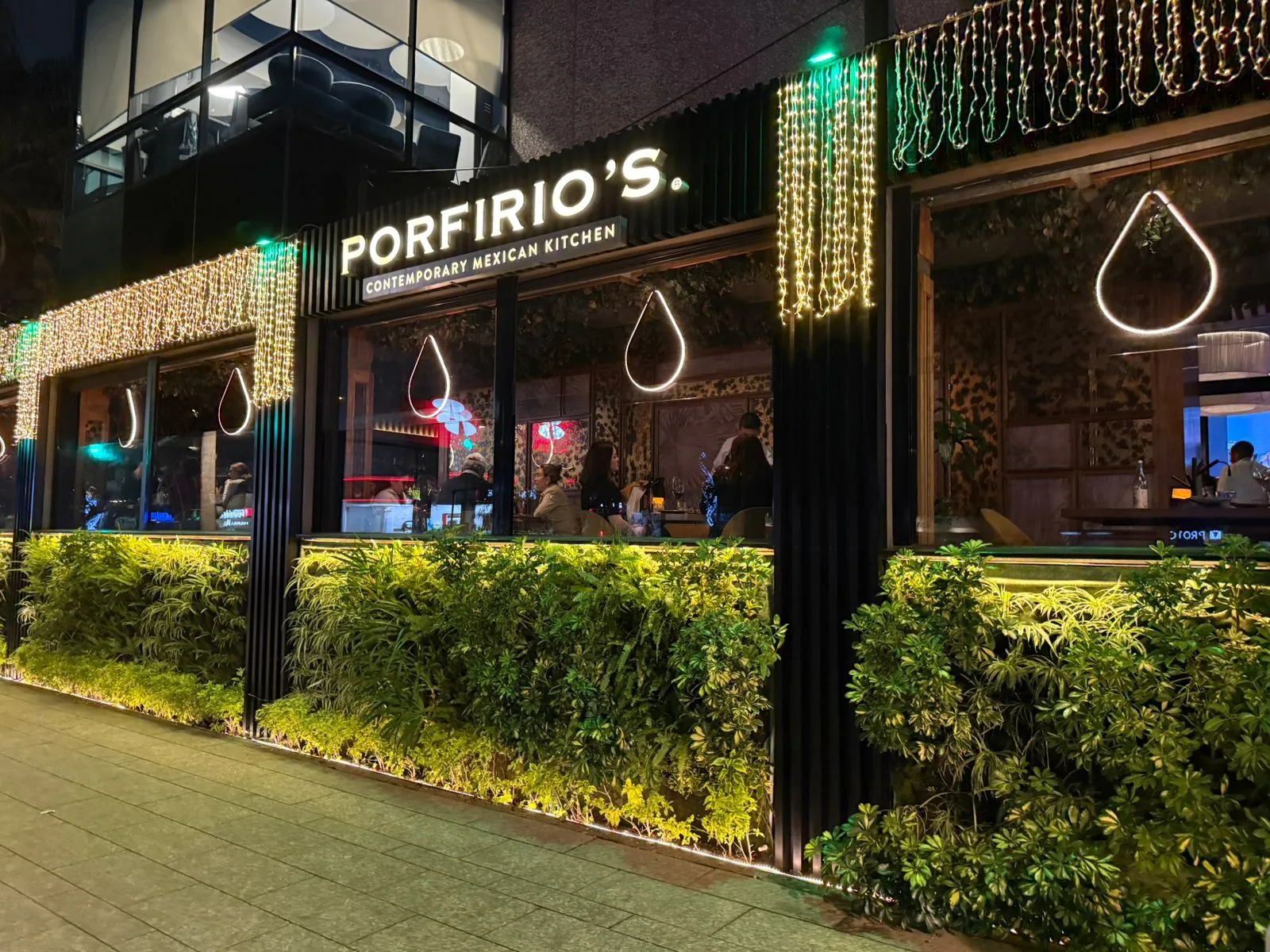
Porfirio's took its Masaryk address in 2014 and built contemporary Mexican cooking into a full night out. The terrace watches the most-walked stretch of Polanco, tuna tostadas and shrimp tacos leave the pass constantly, and live mariachi plays Thursday through Saturday, which is what turns dinner into a second act and makes those the hardest nights to book. The kitchen runs to one in the morning daily.
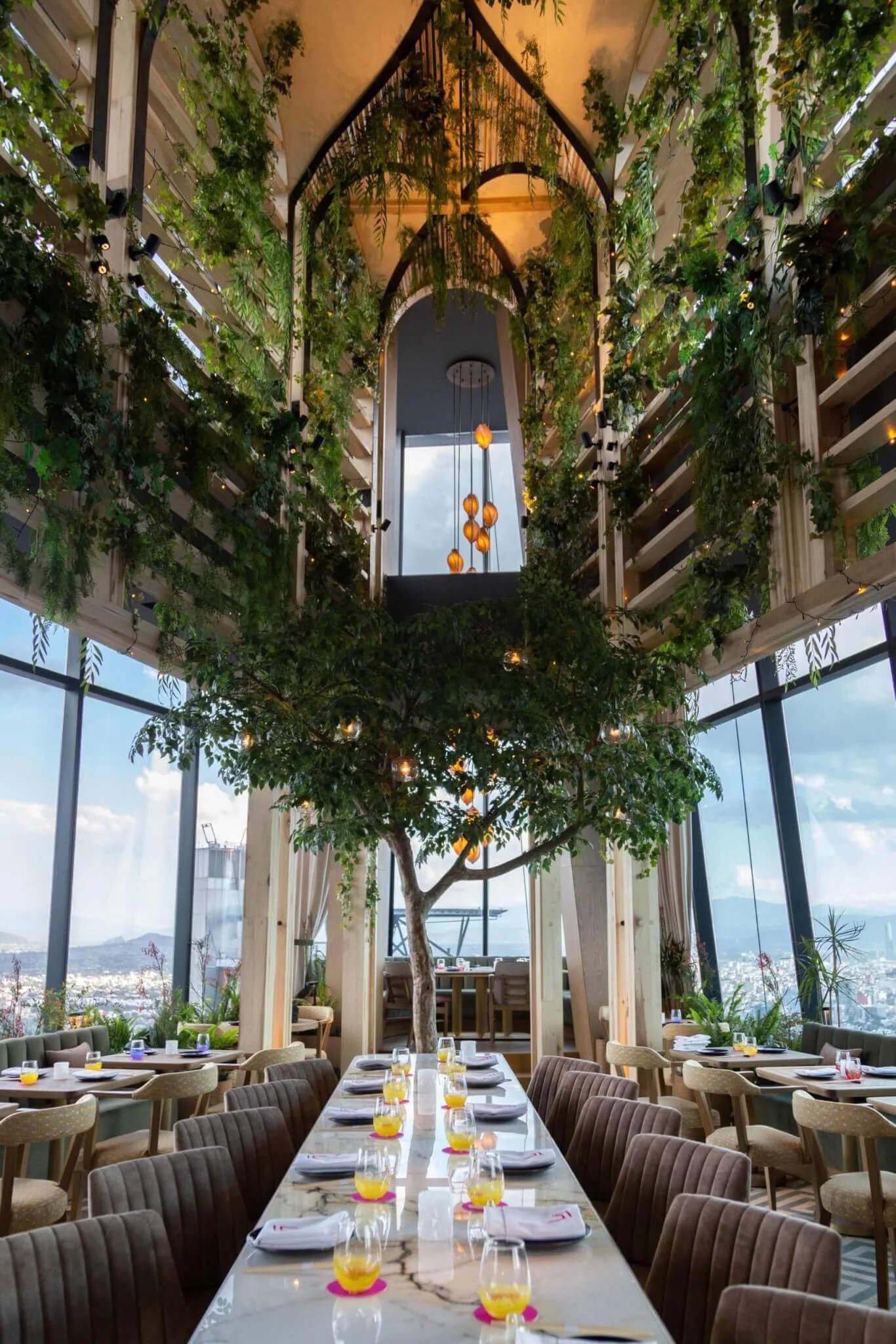
Ling Ling by Hakkasan is the highest table in the argument: the 56th floor of Chapultepec Uno, glass on all sides, with the view running from Chapultepec Castle across the whole basin to the mountains. Modern Cantonese built for sharing - dim sum, crispy duck salad, wok-fired seafood, Peking duck - and then the lighting drops, a resident DJ takes over and the lounge side of the floor fills. Window seats need to be requested at booking.
Cipriani Mexico City is the dressed-up option, on Reforma with a terrace looking toward Chapultepec Castle, white-jacketed service and a Bellini poured all day. LAVO Mexico City is a coastal Italian restaurant at Paseo Arcos Bosques, engineered to turn into a party without stopping being a restaurant, with a crowd that skews corporate at lunch and dressed up after dark.
Two rooms cover the Mexican version of the same idea. Villa Maria on Homero has been Polanco's loudest argument for traditional Mexican cooking since before the neighborhood was a restaurant district - mariachis, jarochos and trios rotating daily, semi-private areas for large parties, and margaritas treated as part of the show. It is the default for birthdays and for visitors who want the full night out. Cabanna Polanco is the loose one: a beach club transplanted onto Masaryk, aguachiles and tostadas, cantaritos and shareable jars, and a soundtrack that climbs from the early afternoon. Thursday to Saturday it runs to around midnight.
For a table that wants a formal, quieter first act before the night gets loud, Hunan has been the reference for upscale Chinese cooking in the city since 1993 - white linen, private dining rooms and family-style sharing plates at the top of Lomas de Chapultepec.
The middle of the night: rooftops
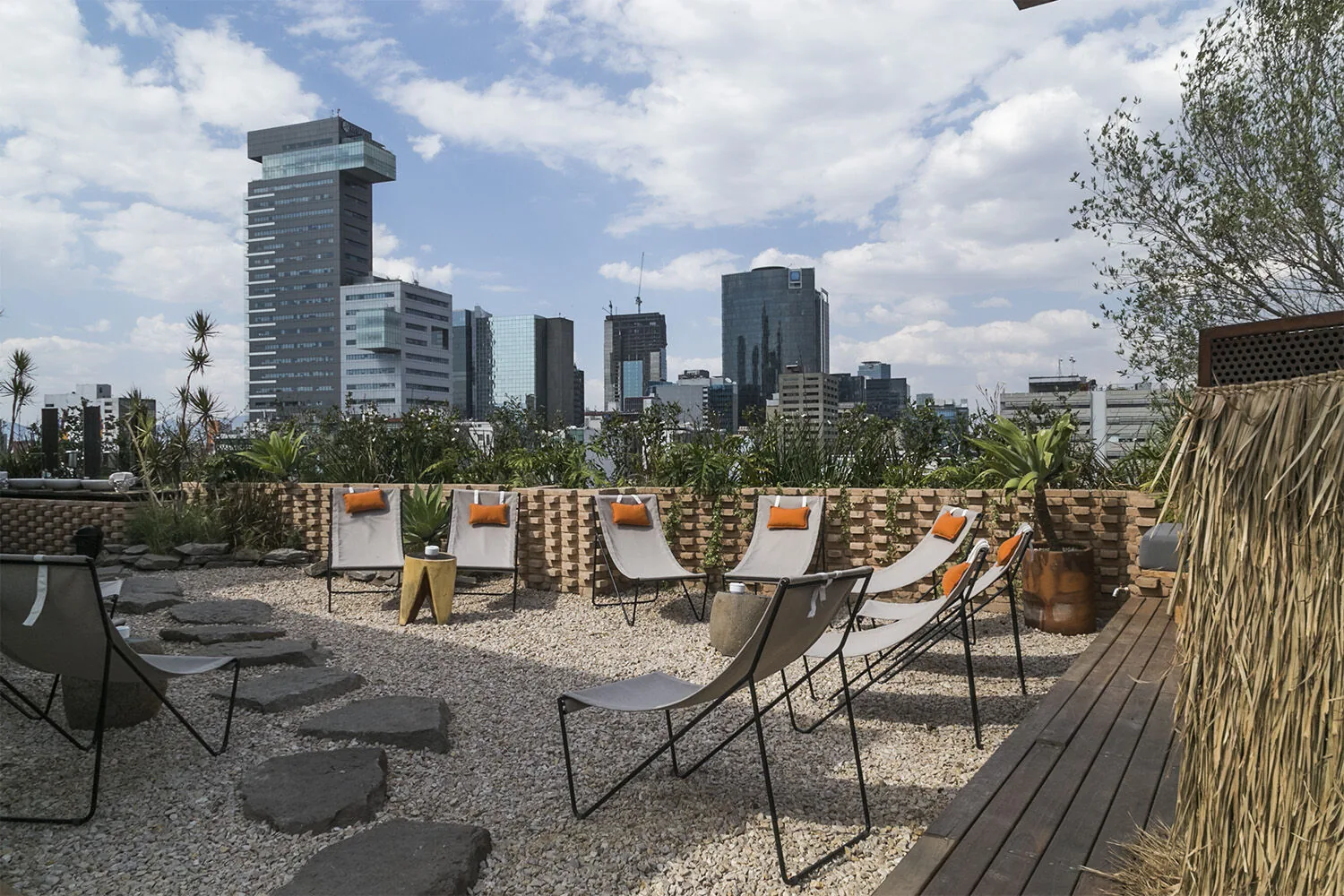
This is where a Mexico City evening genuinely beats the competition. Between about 10 PM and 1 AM the city's rooftops are the right room to be in, and the good ones back the view with a real DJ.
Toledo Rooftop in Juarez looks north over the low roofs to the Reforma skyline. After dark the tables clear and it becomes one of the most reliable social rooms on that side of town, with guest DJs playing house, a dress code and a door that pays attention on weekends. It runs to 2 AM Wednesday through Saturday.
Supra Roma Rooftop floats fourteen floors above Alvaro Obregon with a terrace wrapping the entire floor, so the view runs the full 360 - the Centro to the east, the Reforma towers north, Condesa's canopy south. Open sky, greenery and low lounge seating set the scene, with a soundtrack that builds through the evening and a crowd that mixes locals with international visitors after dark.
Cityzen Rooftop Kitchen is on the 38th floor of the Sofitel, looking straight down Reforma with the Angel de la Independencia lit below and Chapultepec Castle to the west. The crowd shifts from a Reforma office happy hour to a dressed-up dinner scene after nine, and it holds until 2 AM Thursday through Saturday. Carlotta Reforma Sky Bar is the Ritz-Carlton's sky bar on the same floor level in the neighboring tower, and it is the rooftop that puts the park, not the office skyline, at the center of the view. It is calmer than the height suggests - velvet, warm lamps, a marble bar - and it runs later, until 1 AM, Thursday through Saturday.
Terraza Cha Cha Cha puts the Monumento a la Revolucion directly in front of the rail, floodlit after dark, and the room is tropical and loud in the best sense. It is one of the most consistently full terraces in the city, so a weekend table without a booking is rare. Terraza Downtown sits on the roof of a 17th-century palace two blocks from the Zocalo, with a pool, a jacuzzi, a bar at each end of the deck, and it turns properly social from sundown Thursday through Saturday - one of the few rooftop pools in the historic center open to more than hotel guests. Terra Alta is the calmer Centro option, with views over the Historic Center, a bar built around signature cocktails, and patio seating around an outdoor firepit. Terraza Condesa DF is the softest outlook in the city, a narrow triangle of decking pointing out over the treetops of Parque Espana toward Chapultepec Castle, with a Japanese kitchen and a long-standing mixology reputation. It runs to 1 AM Thursday to Saturday.
Four rooftops close early and are best planned as daylight visits. El Mayor looks straight down into the open excavation of the Templo Mayor and closes at 18:30. Balcon del Zocalo faces the main square head-on and is a glass-edged balcony, not a party rooftop, open to 11 PM. La Terraza Gran Hotel has the best seat over the Zocalo, on the fifth floor of the 1899 Gran Hotel with its 1908 stained-glass ceiling below. Comedor Mexicano at Circulo Mexicano faces the back of the Metropolitan Cathedral close enough to read the stonework, and golden hour is the hour.
Clubs: the rooms, and how they differ
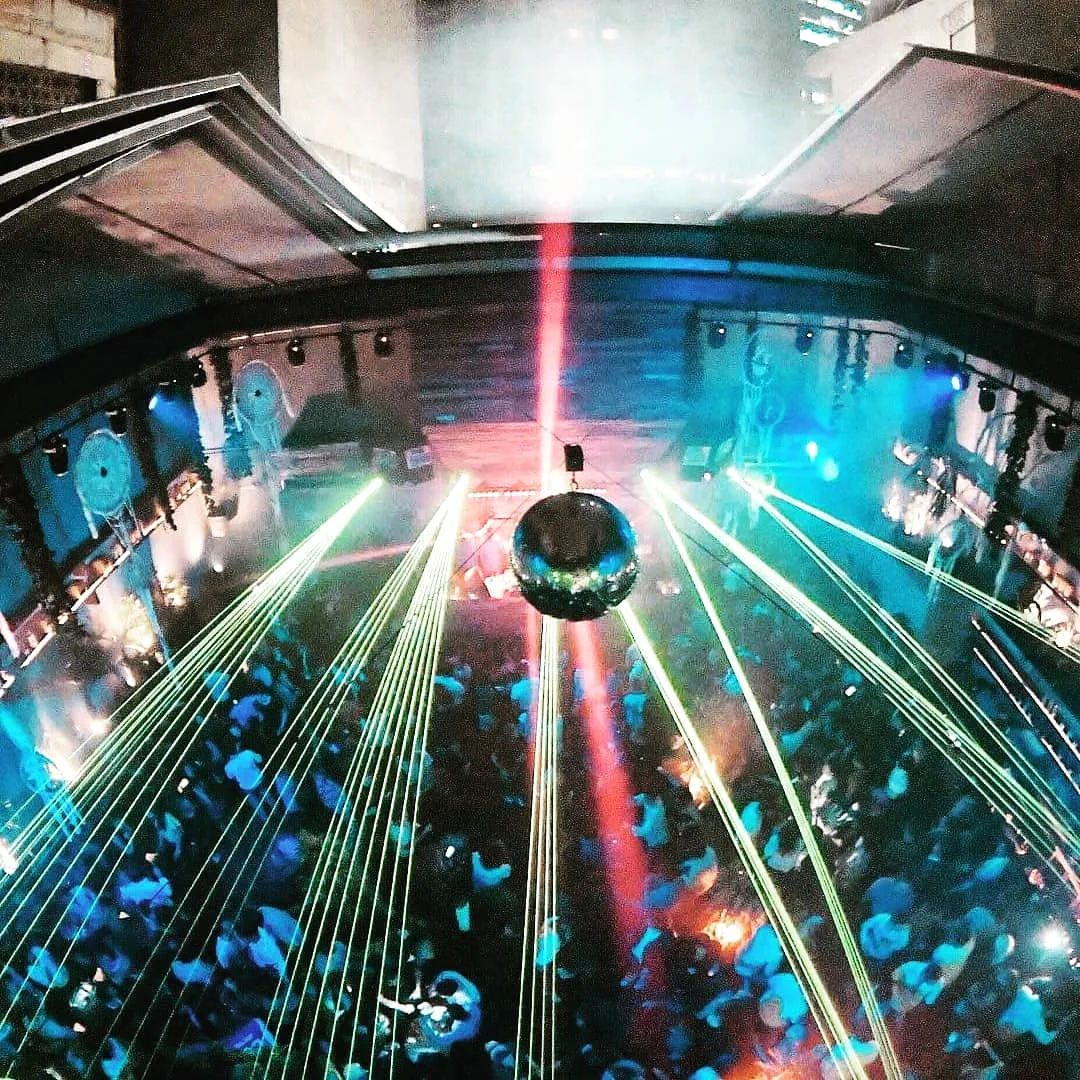
Mexico City does not have one club scene, it has four, and they barely overlap. Knowing which
one you are asking for is most of the work.
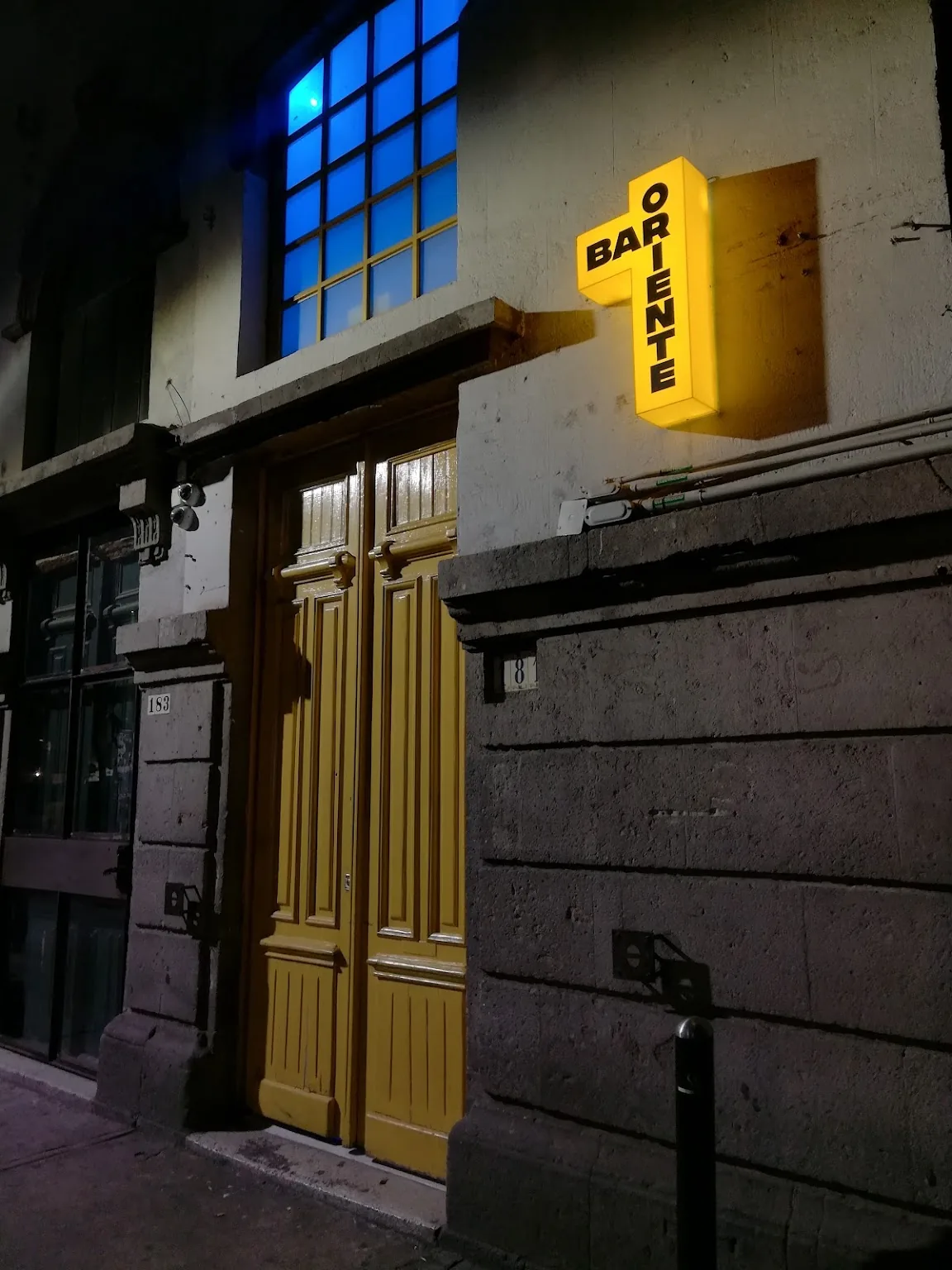
Roma Norte and Juarez is where the electronic floors are. Bar Oriente runs three
stories on Durango with a full VOID Acoustics rig downstairs and private karaoke rooms above it,
so a single address covers two completely different nights. Looloo Studio on Londres is the
purist option, two rooms behind a black marquee, house and techno until about 2am, built for sound, not spectacle.
Polanco is the table-service belt, and it is where the concealed-door format took hold.
Vanderbilt Polanco is a small, upscale table-service room inside Plaza Masaryk, with a selective door and ID required to get in.
Kennedy Social Room runs a properly enforced door, and the room stays small by design.
Cafe Drama hides a late room behind a cafe frontage on Tennyson, and PANEM on
Campos Eliseos opens at 11pm three nights a week and does not pretend to be anything but a
second stop. Ragga Club by Joy in Antara is the newest room in the group, with the music, dress code and nights confirmed when you book.
The sing-along rooms are their own category and, by volume, the busiest thing in Polanco.
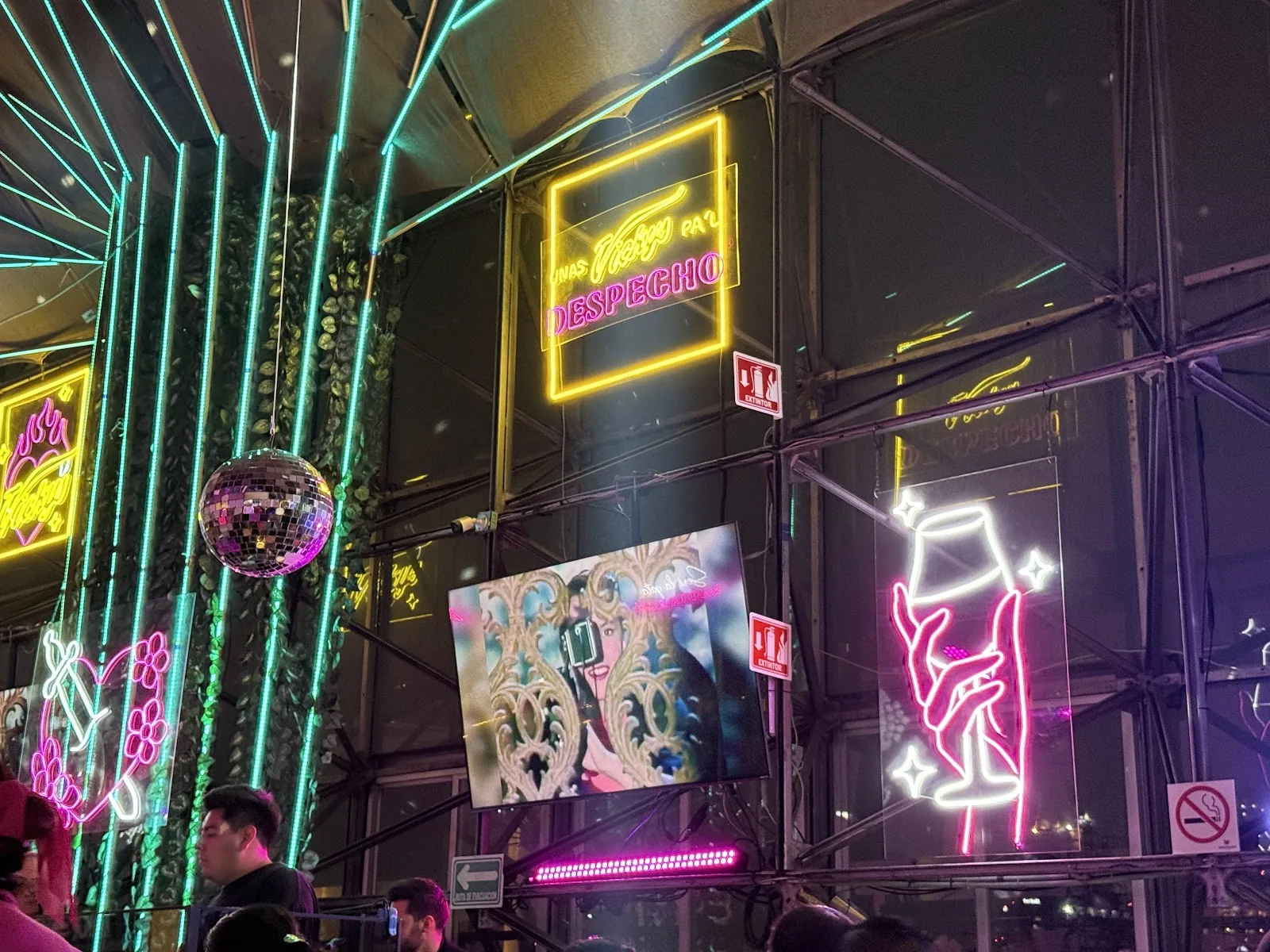
Sala de Despecho Masaryk built an entire venue around despecho, the music of heartbreak and spite, with the night confirmed when you book. Canta Corazon Masaryk on Masaryk does the same trick as a
mezcal cantina with a regional Mexican songbook. Neither is a place to hold a conversation, and
both work best with a group.
West of the park, the hours stretch. Salon Camarena on Paseo de las Palmas is the most theatrical room in the city, wrapped in screens that shift the room from black-and-white to full color between songs, built around the golden age of Mexican television. Alma shares the same Palmas address but
does not open its doors until 11:30pm and runs to 5am, Thursday to Saturday only. Out in Bar 27 Santa Fe, the district's after-hours room is the latest stop of the group.
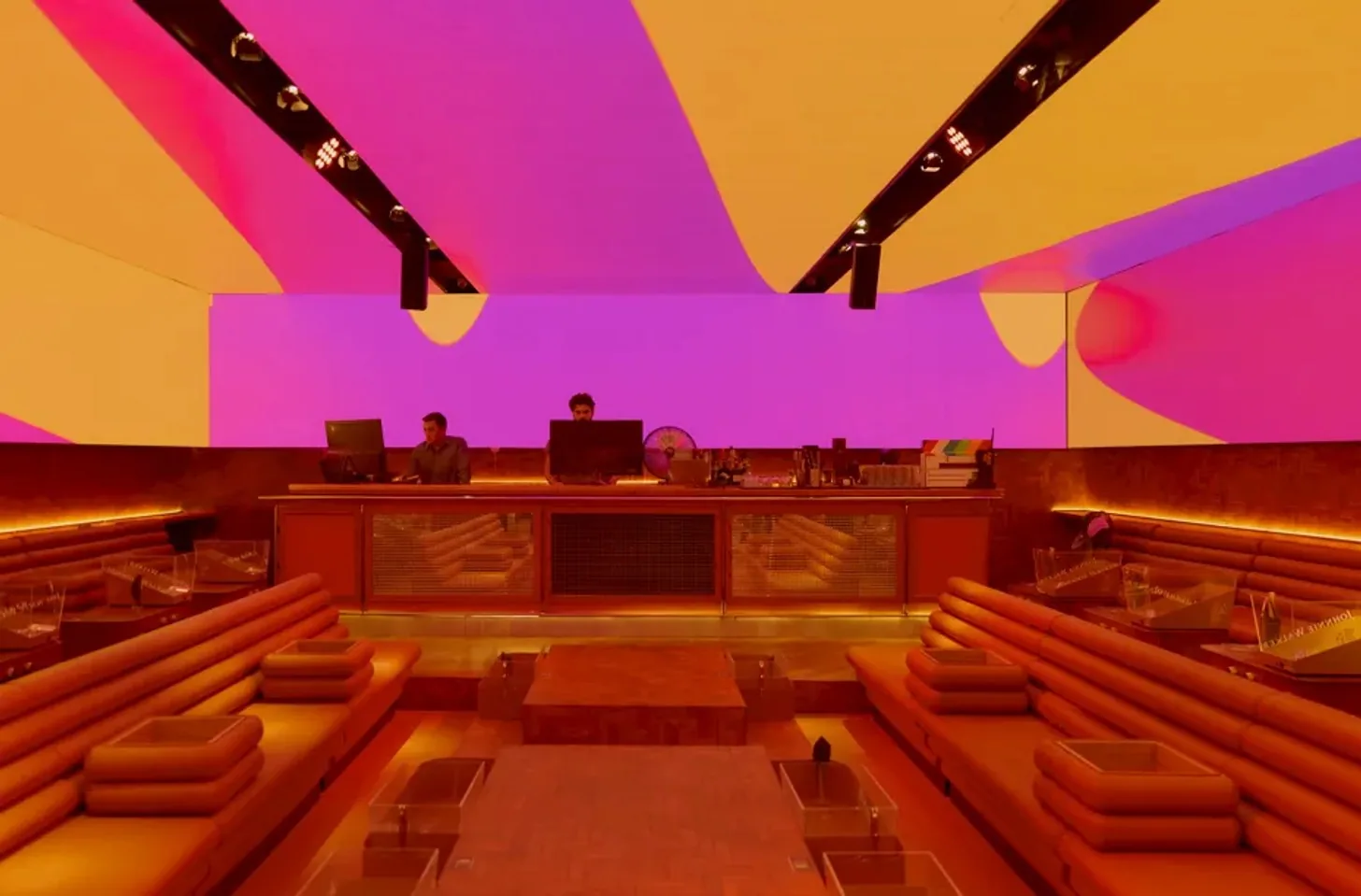
How tables actually work here. Club tables in this city are not sold through a booking widget.
They are placed with the person who controls the room, with pricing set per night and per group, and the guest list matters as much as the spend. The rooms are small enough that
who sits at the next table is a real consideration for the venue. So the club leg of a MyRSVP
itinerary runs through our Mexico City partner: you tell us the group size, the night, the budget
and the kind of room, and we place it with the person who can actually get it done. If the
honest answer for your night is that you should skip the club and stay on the rooftop, that is
what we will tell you.
Practical notes
Dinner reservations that matter should be made two to four weeks out for a weekend. Nothing serious starts before 9 PM and the scene rooms do not peak until 11. Dress codes are real at the Masaryk rooms and at the rooftops with doors, and smart is the safe read. Valet is standard at the Polanco addresses and the only sensible option on Masaryk. And plan for the altitude: at more than 2,200 meters, drinks land harder and earlier than most visitors expect on the first night.
How our Mexico City partner books it
Restaurants and rooftops on MyRSVP book through the venue's own reservation platform, using the booking button on that venue's page - direct to the house, no held inventory, no added fee. Terrace tables, window seats and anything above six guests should be requested by name when you reserve. Nightlife is the exception: club tables in Mexico City are coordinated directly by our Mexico City partner, because in this city that is the only way they are genuinely booked.
Build a custom itinerary with our concierge team. Pair the venues mentioned above into a single concierge-confirmed evening. See the full Las Vegas events calendar for every upcoming DJ and pool party across the city.
Keep reading
Plan a night in another city
Browse all MyRSVP editorials · Back to home